
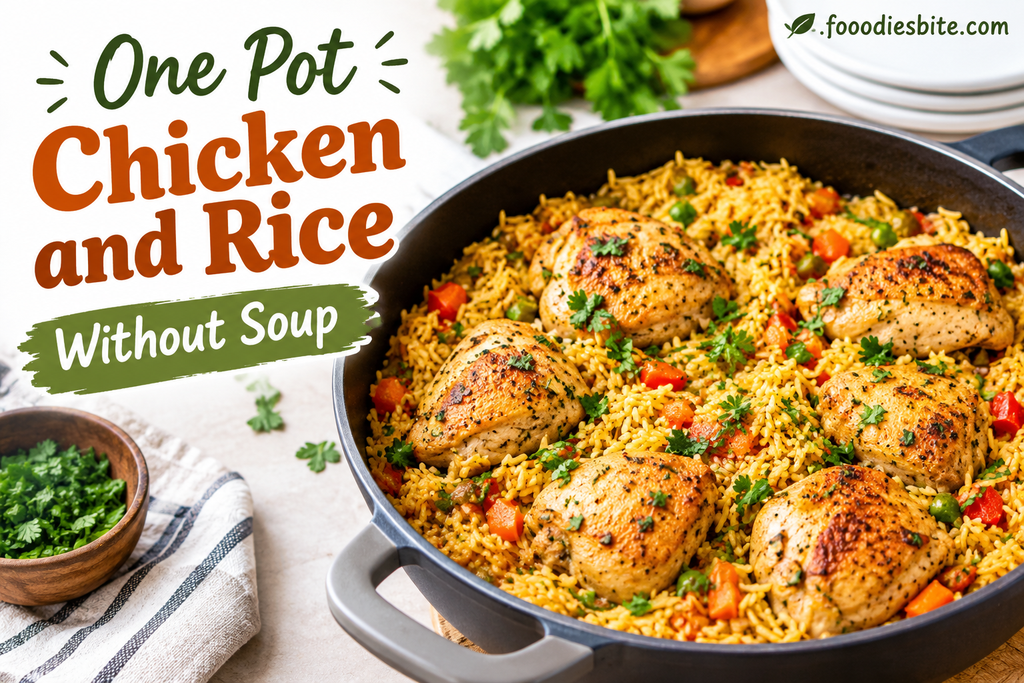
When you need a comforting dinner that doesn’t leave you with a sink full of dishes, one pot chicken and rice without soup is an excellent choice. It is simple enough for a busy weeknight, filling enough for the whole family, and packed with homemade flavor without relying on canned soup.
This recipe uses everyday ingredients such as chicken, rice, onions, garlic, broth, and simple seasonings. Everything cooks together in one pot, allowing the rice to absorb the savory juices from the chicken. The result is tender chicken, fluffy rice, and a satisfying meal that feels like it took much more effort than it actually did.
Whether you are looking for an easy chicken dinner, a budget-friendly family meal, or a simple way to use pantry staples, this one pot chicken and rice without soup recipe is worth keeping in your regular dinner rotation.
Why You’ll Love This One Pot Chicken and Rice
There are plenty of reasons to make this recipe. First, you don’t need canned cream soup to create a rich and flavorful dish. Instead, the flavor comes from properly browning the chicken, sautéing the aromatics, and cooking the rice in seasoned broth.
You also only need one pot, which means less preparation and much easier cleanup.
Here are a few more reasons this recipe works so well:
- It uses simple, affordable ingredients.
- There is no canned soup required.
- Everything cooks in one pot.
- It makes a hearty and filling dinner.
- You can easily customize the seasonings.
- It is suitable for busy weeknights.
- Leftovers can be packed for lunch.
- The rice absorbs all the delicious chicken flavor.
The key is to build flavor in layers rather than depending on a can of soup.
Ingredients You’ll Need
The ingredient list for this one pot chicken and rice without soup recipe is straightforward. You probably already have many of these ingredients in your kitchen.
Chicken
Boneless, skinless chicken thighs are an excellent option because they stay juicy while cooking. Chicken breasts can also be used if you prefer leaner meat, but take care not to overcook them.
You can cut the chicken into bite-sized pieces so that it cooks evenly with the rice.
Rice
Long-grain white rice works particularly well. It stays relatively fluffy and absorbs the broth and chicken juices beautifully.
Avoid using instant rice because it has a different cooking time and texture.
Onion and Garlic
Fresh onion and garlic provide the savory base for the recipe. Sautéing them before adding the rice makes a noticeable difference in flavor.
Chicken Broth
Chicken broth adds much more flavor than plain water. You can use homemade broth or a low-sodium store-bought variety.
Using low-sodium broth also gives you better control over the salt.
Seasonings
A simple combination of paprika, black pepper, salt, garlic powder, onion powder, and dried herbs works beautifully.
You can also add a little cayenne pepper or chili powder if you enjoy a spicy dinner.
Oil or Butter
A little cooking oil helps brown the chicken and sauté the vegetables. Butter can also be added for extra richness.
How to Make One Pot Chicken and Rice Without Soup
Making this recipe is easier than it may seem. The most important thing is to give each stage enough time to develop flavor.
Step 1: Prepare the Chicken
Pat the chicken dry with paper towels. Cut it into evenly sized pieces if you are using boneless chicken.
Season the chicken with salt, black pepper, paprika, garlic powder, and any other preferred seasonings.
Allowing the seasoning to sit on the chicken for a few minutes while you prepare the other ingredients is helpful, although you don’t need to marinate it for hours.
Step 2: Brown the Chicken
Heat a large heavy-bottomed pot or Dutch oven over medium-high heat. Add a little oil.
Place the seasoned chicken into the hot pot in a single layer. Cook until the outside develops a golden-brown color.
The chicken does not need to be completely cooked at this point. It will finish cooking later with the rice.
Remove the chicken from the pot and place it on a plate.
Don’t clean the pot. Those browned bits left behind are full of flavor.
Step 3: Sauté the Onion and Garlic
Add the chopped onion to the same pot.
Cook for several minutes until the onion becomes soft and lightly golden. Add minced garlic and cook for about 30 seconds.
Be careful not to burn the garlic because burnt garlic can make the entire dish taste bitter.
Step 4: Add the Rice
Add the uncooked rice to the pot.
Stir it with the onions and garlic for about one minute. Lightly toasting the rice helps improve its flavor and can help the finished grains remain more distinct.
Step 5: Add Broth and Seasonings
Pour in the chicken broth and scrape the bottom of the pot with a wooden spoon to loosen the flavorful browned pieces.
Add your remaining seasonings and stir gently.
Return the browned chicken and any accumulated juices to the pot.
Step 6: Simmer
Bring the mixture to a gentle boil.
Once it begins bubbling, reduce the heat to low and cover the pot with a tight-fitting lid.
Allow the chicken and rice to cook until the rice is tender and most of the liquid has been absorbed.
Avoid repeatedly lifting the lid during cooking. Every time you remove it, steam escapes, which can affect the cooking process.
Step 7: Rest Before Serving
Once the rice is cooked, turn off the heat.
Keep the lid on and allow the dish to rest for about five to ten minutes.
Then remove the lid and gently fluff the rice with a fork.
Taste and adjust the salt and pepper if needed.
How to Keep the Rice Fluffy
One of the biggest challenges when making chicken and rice in one pot is preventing the rice from becoming mushy.
Start by using the correct type of rice and measuring the liquid carefully.
Rinsing the rice can also help remove excess surface starch. Place the rice in a fine-mesh strainer and rinse under cool water until the water becomes clearer.
Another important step is controlling the heat. After bringing the liquid to a boil, reduce the heat to low. A strong boil can cause the outside of the rice to become overcooked while the inside remains undercooked.
Finally, let the rice rest after cooking. This gives the remaining moisture time to distribute throughout the dish.
Can You Make This Recipe With Chicken Breast?
Absolutely.
Chicken breast works well in one pot chicken and rice without soup, but it is leaner than chicken thighs and can become dry if overcooked.
Cut the chicken breast into relatively large bite-sized pieces rather than very small pieces. Brown them briefly and allow them to finish cooking with the rice.
If your chicken pieces are particularly large, check that they have reached a safe internal temperature before serving.
Can You Use Chicken Thighs?
Chicken thighs are one of the best choices for this recipe.
They contain more fat than chicken breast, which helps them remain tender during longer cooking. Boneless thighs are convenient, while bone-in thighs can provide even more flavor.
If using bone-in chicken, you may need to adjust the cooking time because the pieces are larger.
Best Rice for One Pot Chicken and Rice
Long-grain white rice is generally the easiest choice for this recipe.
Basmati rice is another excellent option, especially if you enjoy its distinctive aroma and separate grains. Jasmine rice can also work, although it tends to be softer and slightly stickier.
Brown rice requires considerably more liquid and a longer cooking time, so it should not simply be substituted in equal amounts without adjusting the recipe.
How to Add More Flavor Without Soup
You don’t need canned soup to make chicken and rice taste rich.
There are several easy ways to increase flavor naturally.
Brown the Chicken
Browning the chicken creates a flavorful crust and leaves browned pieces on the bottom of the pot.
Toast the Rice
Briefly cooking the rice with the aromatics gives it a deeper flavor.
Use Good Broth
Chicken broth provides the liquid base and adds savory flavor to every grain of rice.
Add Fresh Herbs
Parsley, cilantro, thyme, rosemary, or green onions can brighten the finished dish.
Add a Little Lemon
A small squeeze of fresh lemon juice just before serving can balance the richness and make the flavors taste fresher.
Easy Variations
The basic recipe is delicious on its own, but it is also easy to customize.
One Pot Chicken and Rice With Vegetables
Add peas, carrots, corn, bell peppers, or chopped green beans.
Frozen vegetables are especially convenient. Add them during the cooking process according to their size and cooking time.
Spicy Chicken and Rice
For a spicy version, add chili powder, cayenne pepper, crushed red pepper flakes, or a chopped fresh chili.
Cheesy Chicken and Rice
After the rice has finished cooking, sprinkle shredded cheddar, mozzarella, or another melting cheese over the top. Cover the pot for a couple of minutes until the cheese melts.
Lemon Herb Chicken and Rice
Add lemon zest, lemon juice, parsley, and dried oregano for a lighter Mediterranean-inspired version.
Garlic Butter Chicken and Rice
Add a small amount of butter near the end of cooking along with extra minced garlic and fresh parsley.
What to Serve With Chicken and Rice
Because chicken and rice is already a complete and filling meal, you don’t need many side dishes.
A simple green salad is an easy choice. Steamed broccoli, green beans, roasted vegetables, or a cucumber salad can also provide freshness and color.
For a heartier meal, serve the chicken and rice with warm bread or dinner rolls.
If you want to keep the meal particularly simple, fresh herbs and a squeeze of lemon are enough to finish it.
Common Mistakes to Avoid
Even simple recipes can go wrong if a few details are overlooked.
Using Too Much Liquid
Adding extra broth may seem like a good idea, but too much liquid can produce mushy rice.
Measure carefully and remember that ingredients such as vegetables can also release moisture.
Cooking at Too High a Temperature
High heat can cause the liquid to evaporate before the rice is fully cooked.
Once the mixture reaches a boil, reduce the heat and let it gently simmer.
Stirring the Rice Too Much
Frequent stirring releases starch and can make the rice sticky. Once the broth has been added, give everything one gentle stir and then let it cook.
Opening the Lid Frequently
Keeping the lid closed helps maintain the steam needed to cook the rice.
Skipping the Browning Step
You can technically cook everything together, but browning the chicken first gives the finished dish much more flavor.
How to Store Leftovers
If you have leftover chicken and rice, allow it to cool and transfer it to an airtight container.
Store it in the refrigerator and use it within a few days.
When reheating, add a small splash of broth or water before covering and heating. This helps restore moisture to the rice.
You can reheat individual portions in the microwave or warm a larger quantity gently on the stovetop.
Always make sure leftovers are heated thoroughly before eating.
Can You Freeze Chicken and Rice?
Yes, this meal can be frozen, although the texture of the rice may change slightly after thawing.
Allow the cooked chicken and rice to cool completely before placing it in freezer-safe containers.
Divide it into individual portions if you want convenient lunches or quick dinners.
When ready to eat, thaw it safely in the refrigerator and reheat thoroughly. Adding a little broth while reheating can help prevent the rice from becoming dry.
Tips for Making the Recipe Ahead
This recipe is naturally convenient for meal preparation.
You can chop the onion and garlic ahead of time, season the chicken, and measure your rice and spices before you start cooking.
For meal prep, divide the finished chicken and rice into individual containers. Add a small side salad or steamed vegetable when serving.
The flavors can become even more developed after sitting overnight, making leftovers especially convenient for lunch.
Frequently Asked Questions
Can I make one pot chicken and rice without cream soup?
Yes. Chicken broth, aromatics, seasonings, and properly browned chicken provide plenty of flavor without canned cream soup.
Why is my rice mushy?
The most common causes are too much liquid, overcooking, excessive stirring, or using a rice variety with a different liquid requirement.
Measure the ingredients carefully and follow the cooking time for your chosen rice.
Why is my rice still hard?
There may not have been enough liquid, or the heat may have been too high and caused the liquid to evaporate too quickly.
Add a small amount of hot broth if necessary, cover the pot, and continue cooking gently until the rice is tender.
Can I use leftover cooked chicken?
Yes, but the cooking method changes slightly. Since the chicken is already cooked, add it later in the process so it doesn’t become dry.
You can cook the rice with the broth and seasonings first, then stir in chopped leftover chicken toward the end to warm it through.
Can I use brown rice?
You can, but brown rice requires more liquid and a longer cooking time than white rice. Follow a recipe specifically designed for brown rice rather than making a direct substitution.
Can I make this spicy?
Definitely. Add cayenne, chili powder, crushed red pepper, or fresh chili according to your preferred level of heat.
Final Thoughts
A good one pot chicken and rice without soup recipe doesn’t need complicated ingredients or canned sauces to be satisfying. The secret is building flavor from the beginning: brown the chicken, sauté the onion and garlic, toast the rice briefly, and let everything simmer together in flavorful chicken broth.
The beauty of this meal is its simplicity. You can make it on a busy evening when you don’t have much time, customize it with vegetables and seasonings, and still end up with a warm, homemade dinner.
Once you have the basic method down, don’t be afraid to make it your own. Try different herbs, add vegetables, make it spicy, or finish it with fresh lemon and parsley.
With one pot, simple pantry ingredients, and a little patience, you can make a comforting chicken dinner that the whole family will want again.