
There is something deeply reassuring about a tray of sausage and potatoes coming out of the oven. The potatoes are golden at the edges and soft inside, the sausages are browned and juicy, and the whole kitchen smells like dinner is going to be good. This one-pan sausage and potato bake is the kind of meal that asks very little of you — a bit of chopping, a good drizzle of oil, and the oven does the rest — and it rewards you with a hearty, honest dinner that everyone at the table will be happy about.
I reach for this recipe most often on the evenings when I am tired and do not want to stand over the stove. Everything goes onto one sheet pan or into one baking dish, and while it roasts you are free to do something else: set the table, help with homework, or simply sit down for twenty minutes. There is no stirring, no juggling multiple pans, and barely any cleanup. It is the definition of a low-effort, high-reward dinner.
It is also endlessly adaptable. Use whatever sausages you like — Italian, bratwurst, chicken sausage, or a spicy variety if you want some heat. Add whatever vegetables are hanging around in the fridge. Change the herbs to suit your mood. The basic method never changes, and it never lets you down. If you are new to one-pan cooking, this is a perfect place to start, and if you are already a fan, it will quickly become one of your most-cooked meals.
Why You’ll Love This Recipe
The first reason is the oven does the work. Unlike a stir-fry or a skillet dinner that needs your attention the whole time, this bake goes into the oven and largely takes care of itself. You check it once or twice, give it a turn, and that is it. That hands-off quality makes it ideal for weeknights when you have other things to do, and equally good for weekends when you would rather be with your guests than stuck in the kitchen.
The second reason is the flavor that comes from roasting. When potatoes roast at high heat, their edges crisp and caramelize, and the sausages release their juices, which baste the vegetables below. Peppers soften and sweeten, onions turn golden, and everything picks up a little of everything else’s flavor. No sauce is needed, because the pan juices are the sauce — rich, savory, and perfect for spooning over the top.
The third reason is how filling and flexible it is. Potatoes make the meal substantial without costing much, and the dish feeds a family generously from a single pan. Leftovers reheat beautifully, and the whole thing can be scaled up or down without any fuss. It is the kind of practical, crowd-pleasing dinner that belongs in every cook’s regular rotation, right alongside the other reliable one-pan meals on FooodiesBite.
Ingredients You’ll Need
You will need about one and a half pounds of sausages — Italian pork sausage is the classic choice, but chicken sausage or bratwurst work just as well. If your sausages are linked, you can leave them whole for a rustic look or cut them into chunks; whole sausages stay juicier, while chunks give you more browned edges, so it is really a matter of preference.
For the vegetables, gather two pounds of potatoes cut into one-inch chunks, one red bell pepper and one yellow bell pepper cut into strips, one large red onion cut into wedges, four cloves of garlic left whole but smashed, and a handful of cherry tomatoes if you have them. Two tablespoons of olive oil, a teaspoon of dried oregano or Italian seasoning, a teaspoon of smoked paprika, salt, black pepper, and a few sprigs of fresh rosemary or thyme complete the list. A drizzle of balsamic vinegar at the end is optional but lovely.
On potatoes: waxy varieties like Yukon Gold hold their shape beautifully and crisp up well, while starchy russets get fluffier inside but can fall apart if cut too small. Either works — just keep the chunks roughly the same size so they cook evenly. And do not peel them unless you really want to; the skin adds texture and saves time.
How to Make One-Pan Sausage and Potato Bake
Preheat your oven to 425°F (220°C) — a hot oven is essential for crisping the potatoes rather than steaming them. While it heats, toss the potato chunks, peppers, onion, and garlic in a large bowl with the olive oil, oregano, smoked paprika, salt, and pepper. Make sure everything is well coated; dry spots on potatoes will not crisp. Spread the vegetables out on a large rimmed sheet pan or in a baking dish in a single layer, giving them room to breathe.
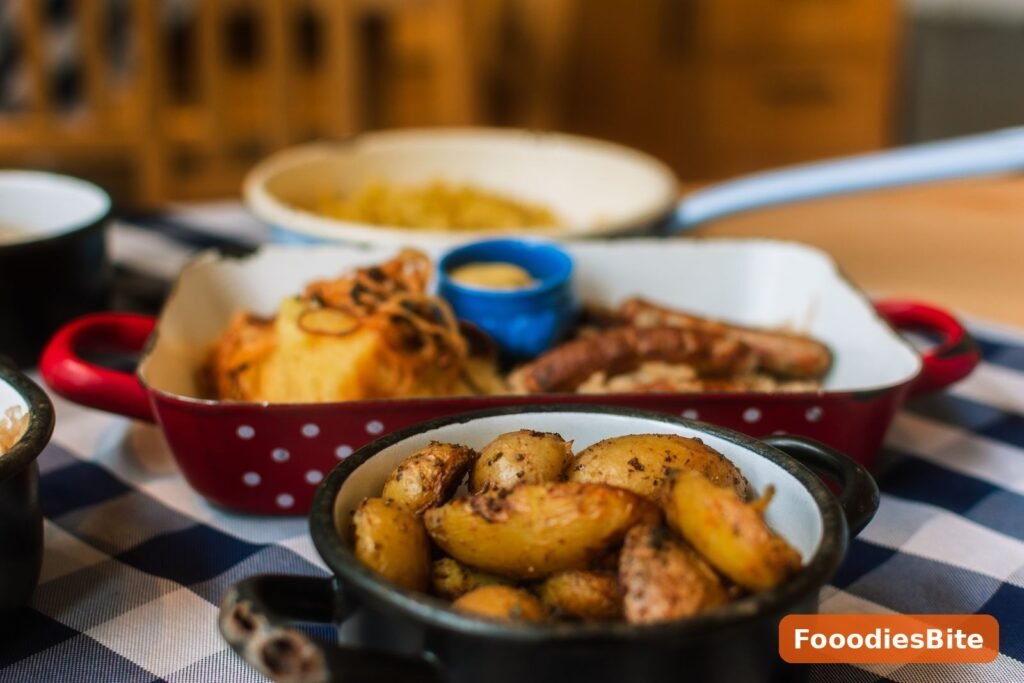
Nestle the sausages among the vegetables, tucking the rosemary or thyme sprigs around them. If you are using cherry tomatoes, scatter them over the top. Slide the pan into the oven and roast for twenty minutes, then take it out and turn the potatoes and sausages so they brown evenly on all sides. Return the pan to the oven for another twenty to twenty-five minutes, until the potatoes are golden and tender when pierced with a knife and the sausages are browned and cooked through.
If the sausages are browning faster than the potatoes are cooking, you can move them to the top of the vegetables or tent the pan loosely with foil for the last ten minutes. Once everything is done, drizzle with a little balsamic vinegar if you like, scatter over fresh parsley, and let the pan rest for five minutes before serving. Those five minutes let the juices settle and make the whole dish taste better.
Tips for the Best Bake
The single most important tip is not to crowd the pan. If the vegetables are piled on top of each other, they will steam instead of roast, and you will end up with soft, pale potatoes instead of crisp, golden ones. Use your largest sheet pan, and if you are doubling the recipe, use two pans rather than one overloaded one. Space is the secret ingredient in roasting.
Cut size matters too. Potatoes cut into even, one-inch chunks cook at the same rate, so you do not end up with some pieces burnt and others raw in the middle. The same goes for the peppers and onion — keep the pieces roughly similar and they will finish together. And resist the urge to open the oven every five minutes to check; every time the door opens, the temperature drops and the crisping slows down.
Sausage choice changes the character of the dish more than anything else. Mild Italian sausage keeps it family-friendly, spicy Italian sausage adds a pleasant warmth, and bratwurst gives it a German-inspired feel. If you want to learn more about how different sausages are made and what sets them apart, Wikipedia’s sausage guide is a surprisingly interesting read. Whatever you pick, check that the sausages are cooked through — they should be firm to the touch and browned all over.
Variations to Try
Once you know the base recipe, the variations are almost endless. For a Mediterranean feel, add a can of drained chickpeas, a handful of olives, and a crumbled block of feta in the last ten minutes of cooking. For an autumn version, swap half the potatoes for chunks of butternut squash and sweet potato, and add a drizzle of maple syrup with the oil — the sweetness against the savory sausage is wonderful.
A spicy version is easy too: use hot Italian sausage, add a sliced jalapeño or a pinch of chili flakes, and finish with a squeeze of lemon. For a lighter meal, use chicken or turkey sausage and load the pan with extra vegetables — zucchini, mushrooms, and green beans all roast beautifully alongside potatoes. And if you want a one-pan breakfast-for-dinner, crack a few eggs over the pan in the last ten minutes and let them set in the oven.
You can also change the seasoning entirely. A teaspoon of cumin and coriander with a squeeze of lime gives the bake a Middle Eastern feel, while a spoonful of wholegrain mustard tossed with the vegetables adds a tangy sharpness that pairs beautifully with pork sausage. The method stays the same; only the flavors change, which is why this recipe never gets boring.
Serving Ideas

This bake is a complete meal on its own, but a few simple additions turn it into a proper dinner. A pile of crusty bread is almost essential — there are pan juices to mop up, and it would be a shame to waste them. A simple green salad with a sharp vinaigrette cuts through the richness nicely, and a spoonful of wholegrain mustard or a dish of pickles on the table adds a bright contrast that keeps the meal from feeling heavy.
For a heartier spread, serve the bake with a side from the sides and vegetables collection — roasted green beans, glazed carrots, or a warm cabbage slaw all work well. If you are cooking for a crowd, double the recipe across two pans and set out a big salad and plenty of bread; people can help themselves, and the whole thing feels generous without much extra effort.
Leftovers are excellent the next day. Store them in an airtight container in the fridge for up to three days, and reheat in a hot oven or air fryer so the potatoes crisp up again — the microwave will make them soft. Cold leftover sausage and potatoes, sliced and tossed into a salad or tucked into a wrap with mustard, also make a surprisingly good lunch.
Storage and Make-Ahead Notes
You can prep this bake hours ahead: chop all the vegetables, toss them with the oil and seasonings, and keep the pan covered in the fridge. When you are ready to cook, just add the sausages and slide it into a preheated oven — dinner is about forty-five minutes away with almost no hands-on time. This makes it a great option for days when you know the evening will be hectic.
Cooked leftovers keep for up to three days refrigerated, and they also freeze reasonably well for up to two months, though the potatoes will be a little softer after thawing. Reheat frozen portions in the oven from thawed, and give the potatoes a few extra minutes at high heat to crisp back up. If you love this style of hands-off cooking, the one-pot chicken and rice and the easy chicken recipes with frozen vegetables on FooodiesBite follow the same low-effort philosophy, and BBC Good Food’s sausage traybake ideas offer more inspiration for the format.
Frequently Asked Questions
Should I prick the sausages before baking?
No — pricking lets the juices escape, and those juices are what keep the sausages moist and baste the vegetables. Modern sausages are made to handle oven heat without bursting, especially at 425°F. If a sausage does split slightly, it is not a problem; it will still taste great, and the juices will only improve the pan.
Can I use sweet potatoes instead of regular potatoes?
Yes, and they are delicious here. Sweet potatoes roast a little faster and caramelize more, so cut them slightly larger than you would regular potatoes and check them five minutes early. A mix of half regular and half sweet potatoes gives you the best of both — crisp, savory chunks and sweet, caramelized ones.
Do I need to parboil the potatoes first?
Not for this recipe. At 425°F with enough time, the potatoes cook through and crisp up without any parboiling. Parboiling can help if you are using very large chunks or a cooler oven, but for one-inch pieces at high heat, it is an unnecessary step. Just make sure the chunks are not too big, and give the pan enough time.
What temperature should the sausages reach?
Pork sausages should reach 160°F in the center, and chicken or turkey sausages should reach 165°F. If you do not have a thermometer, look for sausages that are firm to the touch, browned all over, and with clear juices. When in doubt, cut one open — the center should be cooked through with no pink remaining.
Can I cook this in a cast-iron skillet instead of a sheet pan?
Absolutely, and a cast-iron skillet gives you wonderful browning. Just make sure the skillet is large enough that the vegetables are not crowded — a 12-inch skillet works for the recipe as written. The cooking time stays about the same, and the skillet can go straight to the table for a rustic presentation.