
There are some dinners that feel like a small celebration even on an ordinary Tuesday, and this one-pan creamy Tuscan salmon is exactly that kind of meal. It starts with salmon fillets seared until the skin is crisp and the flesh is still tender inside, and it finishes in a sauce so good you will want to mop up every last drop with a piece of bread. Spinach wilts into the cream, sun-dried tomatoes bring a tangy sweetness, and garlic ties the whole thing together. It tastes like something you would order at a nice restaurant, but the whole thing comes together in one pan in about half an hour.
What I love most about this recipe is how forgiving it is. You do not need any special equipment, and you do not need to be a confident cook to get it right. The sauce is built right in the same pan you seared the fish in, which means all those golden brown bits left behind from the salmon melt into the cream and make it taste even better. And because everything happens in one pan, cleanup is genuinely quick — one skillet, one spatula, and dinner is done.
This is also one of those recipes that works for almost any occasion. Make it for a quiet dinner at home when you want something a little nicer than usual, or cook it when friends are coming over and you want to look like you put in far more effort than you actually did. Pair it with crusty bread, rice, or pasta, and you have a complete meal that feels generous without being fussy. If salmon is already a regular in your kitchen, this recipe will quickly become the way you cook it most often.
Why You’ll Love This Recipe
First, it is fast. From the moment you start heating the pan to the moment you sit down to eat, you are looking at roughly thirty minutes. That makes it a realistic weeknight dinner, not a weekend project. The salmon cooks in about eight minutes, and the sauce takes another ten or so. Nothing needs to marinate, and nothing needs to rest for long.
Second, the flavor is layered in a way that surprises people. The sun-dried tomatoes give the sauce a deep, almost jammy sweetness, the garlic keeps it savory, and a pinch of Italian seasoning adds that warm herbal note that makes the dish taste unmistakably Tuscan. A splash of cream rounds everything out, and the spinach adds color and a bit of freshness so the dish never feels heavy, even though it is rich.
Third, it is a one-pan meal in the truest sense. The salmon, the sauce, and the vegetables all share the same skillet, which means the flavors build on each other instead of staying separate. It also means fewer dishes, which, on a busy evening, matters just as much as taste. If you are building a collection of dependable one-pan dinners, this one belongs right next to the other skillet favorites on FooodiesBite.
Ingredients You’ll Need
For the salmon, you will need four salmon fillets, about six ounces each, with the skin on or off depending on what you prefer. Skin-on fillets hold together beautifully in the pan and crisp up nicely, but skinless works just as well. Pat them dry with paper towels before cooking — this is the single most important step for getting a good sear. Season generously with salt, black pepper, and a little paprika if you like a touch of warmth.
For the sauce, gather two tablespoons of olive oil, three tablespoons of butter, four cloves of garlic minced, one small onion finely diced, one cup of heavy cream, half a cup of vegetable or chicken broth, a third of a cup of sun-dried tomatoes in oil drained and sliced, one teaspoon of Italian seasoning, half a cup of freshly grated Parmesan, and three big handfuls of baby spinach. A squeeze of lemon at the end brightens everything, and fresh basil is lovely if you have it, though it is not essential.
A note on the cream: heavy cream is what gives this sauce its body and keeps it from splitting when it simmers. Half-and-half can work in a pinch, but the sauce will be thinner and you will need to be more careful with the heat. If you want to lighten things slightly, use a little less cream and a little more broth, but keep at least some cream for that silky texture.
How to Make One-Pan Creamy Tuscan Salmon
Start by seasoning the salmon fillets on both sides with salt, pepper, and paprika. Heat the olive oil in a large skillet over medium-high heat until it shimmers, then lay the fillets in the pan skin-side down if they have skin. Let them cook undisturbed for about four minutes — resist the urge to move them around, because that undisturbed contact is what builds the golden crust. Flip carefully and cook for another three to four minutes, until the salmon is nearly cooked through but still slightly translucent in the very center. Transfer the fillets to a plate and set them aside.
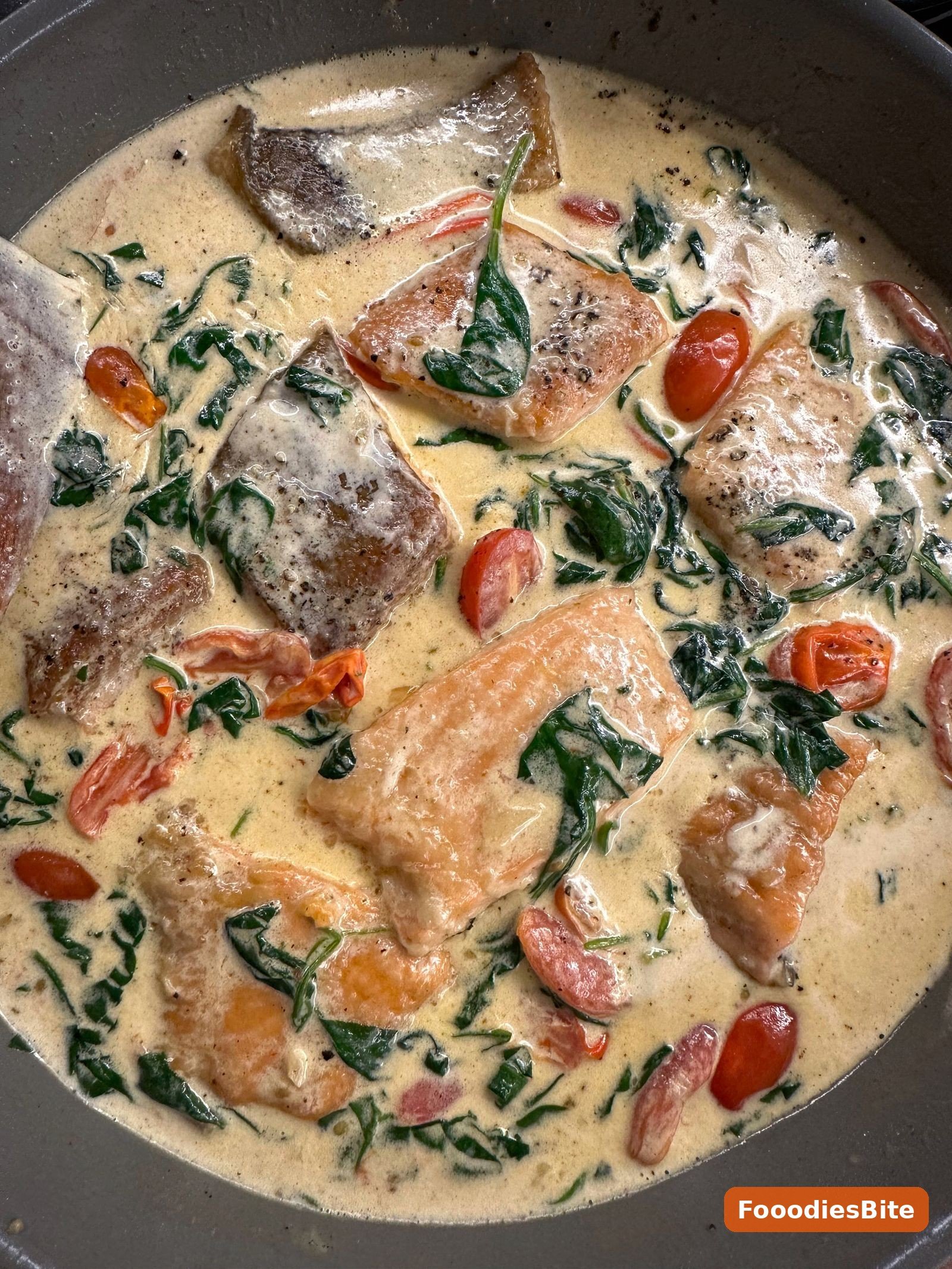
Now lower the heat to medium and add the butter to the same pan. Once it melts, add the onion and cook for two to three minutes until it softens, scraping up any browned bits from the bottom of the pan as you go. Add the garlic and cook for just thirty seconds, until fragrant — garlic burns quickly, so keep it moving. Pour in the broth and let it bubble for a minute, then stir in the cream, sun-dried tomatoes, and Italian seasoning. Let the sauce simmer gently for three to four minutes until it thickens slightly and coats the back of a spoon.
Stir in the Parmesan a little at a time until it melts into the sauce, then add the spinach in handfuls, stirring until each batch wilts before adding the next. This takes about two minutes. Taste the sauce and adjust the salt and pepper — the Parmesan adds saltiness, so you may need less than you expect. Return the salmon fillets to the pan, spooning some sauce over the top, and let everything warm together for two minutes. Finish with a squeeze of lemon and a scattering of basil, and serve straight from the pan.
Tips for Perfect Salmon Every Time
The biggest mistake people make with salmon is overcooking it. Salmon continues to cook a little after it leaves the pan, so pull it out when the center still looks slightly underdone. It will finish gently in the warm sauce, and you will end up with moist, flaky fish instead of dry, chalky pieces. If you have an instant-read thermometer, aim for about 125°F in the thickest part before it goes back into the sauce.
Patting the fillets dry matters more than most recipes admit. Moisture on the surface steams instead of searing, which means you get pale, soft fish instead of a golden crust. Take ten seconds with a paper towel and you will notice the difference immediately. Also, make sure your pan is properly hot before the salmon goes in — if the oil is not shimmering, wait another minute.
Choosing good salmon makes a difference too. Fresh fillets should smell like the sea, not fishy, and the flesh should spring back when pressed. If you are curious about the different kinds available, Wikipedia’s salmon overview is a helpful place to learn how wild and farmed salmon differ. Either type works here, though richer farmed fillets tend to stay extra moist in a cream sauce.
Variations to Try
Once you have the base recipe down, it is easy to make it your own. For a spicier version, add a pinch of red pepper flakes with the garlic — just a quarter teaspoon is enough to warm the sauce without overpowering the salmon. Mushrooms are another wonderful addition: slice them thin, cook them with the onion, and they add an earthy depth that works beautifully with the cream.
If you want to skip the dairy, you can make a lighter version with full-fat coconut milk instead of cream and skip the Parmesan, finishing with a little nutritional yeast or just extra lemon. It will not taste identical, but it is still rich and satisfying. For a heartier meal, stir in a can of drained white beans with the spinach — they soak up the sauce and turn the dish into something even more filling.
You can also swap the protein. The same Tuscan sauce is wonderful with chicken thighs, and if you are in the mood for chicken instead of fish, the easy chicken and rice skillet recipe on FooodiesBite is another one-pan dinner worth trying. The sauce technique is similar, so once you know one, the other feels easy.
Serving Ideas
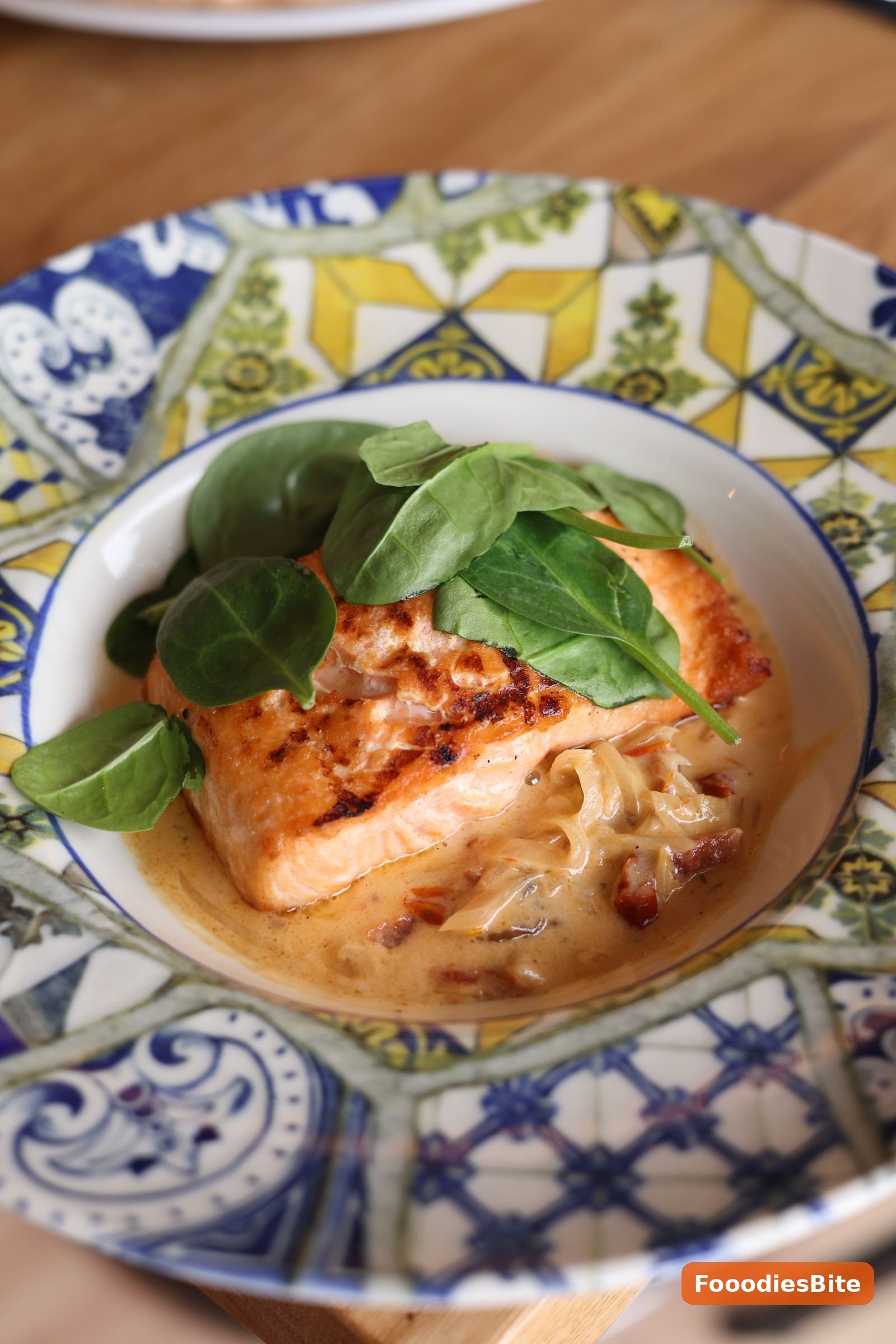
This salmon is generous with sauce, so think about what will catch it. Crusty bread is the simplest and, honestly, my favorite — there is something deeply satisfying about dragging warm bread through garlicky cream sauce. If you want something more substantial, serve it over mashed potatoes, buttered rice, or short pasta like penne, which holds the sauce in its ridges.
For a lighter plate, pair the salmon with roasted asparagus, green beans, or a simple salad with lemon dressing. The richness of the sauce balances nicely against something green and crisp. If you are planning a full dinner spread, a glass of chilled white wine and a simple dessert from the desserts and baking collection round the evening out nicely.
Leftovers reheat better than you might expect. Keep the salmon and sauce together in an airtight container in the fridge for up to two days, and warm them gently in a covered skillet over low heat with a splash of cream or broth to loosen the sauce. Avoid the microwave if you can — it tends to overcook the fish and split the sauce.
Storage and Make-Ahead Notes
This dish is best eaten fresh, but it keeps well enough to be worth making a little extra. Store cooled leftovers in a sealed container in the refrigerator for up to two days. The sauce will thicken as it cools; a splash of broth or cream while reheating brings it right back. Freezing is not ideal, because cream sauces can separate when thawed, so I would skip that and enjoy the leftovers the next day instead.
If you want to get ahead, you can prep the ingredients in the morning: mince the garlic, dice the onion, slice the sun-dried tomatoes, and grate the Parmesan, then keep everything covered in the fridge. With the prep done, the actual cooking takes under twenty minutes, which makes this a genuinely realistic option for a busy evening. The sauce can also be made a few hours ahead and kept in the pan, covered, then gently reheated before you sear the salmon and finish the dish.
For more ideas in this style, browse the full FooodiesBite homepage for the latest one-pan recipes, and if you love cooking fish in a skillet, the creamy salmon dishes on BBC Good Food offer more inspiration in a similar vein.
Frequently Asked Questions
Can I use frozen salmon fillets for this recipe?
Yes, but thaw them fully first, ideally overnight in the refrigerator. Thawed fillets release more water than fresh ones, so pat them very dry with paper towels before seasoning. If you skip this step, the salmon will steam rather than sear, and you will lose that golden crust that makes the dish so good.
What can I use instead of heavy cream?
Full-fat coconut milk is the closest dairy-free swap and still gives a rich sauce. Half-and-half works but produces a thinner sauce, so simmer it a little longer and keep the heat gentle to avoid curdling. I would avoid regular milk here — it is too thin and far more likely to split when it simmers with the tomatoes and lemon.
Do I need to remove the skin from the salmon?
Not at all. Skin-on fillets are actually easier to handle in the pan because the skin holds the fish together and crisps up beautifully. If you prefer skinless, that works too — just be a little more careful when flipping, and use a thin, flexible spatula so the fillet does not break apart.
Can I make this recipe ahead of time?
You can prep all the ingredients ahead, and you can even make the sauce a few hours in advance and keep it covered in the pan. But the salmon itself is best seared just before serving, so it stays moist and the crust stays crisp. If you do reheat leftovers, warm them gently over low heat with a splash of cream, and avoid boiling the sauce.
What sides go best with creamy Tuscan salmon?
Anything that catches sauce is a good choice: crusty bread, mashed potatoes, rice, or short pasta. For vegetables, roasted asparagus, green beans, or a simple lemon-dressed salad balance the richness nicely. If you want a complete one-pan feel, you can even stir cooked pasta directly into the sauce before adding the salmon back.