
Introduction
There is a particular sound a good roast potato makes when you bite into it — a proper crunch, followed by a fluffy, steaming middle — and once you have had it, the pale, soft potatoes of your childhood Sunday dinners feel like a distant memory. For a long time I assumed that crunch came from a coating: breadcrumbs, semolina, something sprinkled on top to crisp up in the oven. It turns out the potato can do it all by itself, if you treat it right. No breadcrumbs, no special coating, no packet mix. Just potatoes, fat, salt, heat, and a bit of patience.
This recipe is for the potatoes I make most often at home: golden, craggy, properly crisp on the outside and soft inside, with no coating at all. They go with almost everything — roast chicken, grilled fish, a fried egg, a big salad — and they are just as good eaten standing up in the kitchen, straight from the tray, while you pretend you are only checking whether they are done. I have made them for Sunday roasts, for quick weeknight dinners, and for friends who arrived hungry and left asking what the secret was. The secret, as you will see, is not one trick but three small ones, done in order.
If you have ever been disappointed by roast potatoes that came out leathery, greasy, or stubbornly soft, this is the recipe to fix that. The steps below explain not just what to do but why it works, so you can adapt the method to whatever potatoes and equipment you have. Once you understand the principles — rough up the surface, dry it thoroughly, roast it hot with enough space — you will never need to follow a roast potato recipe word for word again. You will just know how to make them crisp, every time.
Why Potatoes Go Crisp Without Any Coating
A potato is mostly starch and water, and crispness is really about what happens to that starch on the surface. When you parboil potatoes and then shake them in the pan, you rough up the outside into a sort of starchy fuzz. In a hot oven, that fuzz dries out, fries in the fat, and turns into a crunchy, golden crust. Breadcrumbs try to imitate that crust from the outside; a well-prepared potato makes its own, and it tastes better because it is actually potato, not a coating that can fall off or go soggy.
Moisture is the enemy of crispness, which is why so many roast potatoes fail. Potatoes straight from a pan of boiling water are wet, and wet surfaces steam instead of frying. That is why drying matters so much in this recipe: draining well, letting the potatoes steam dry in the colander, and giving them space on the tray so steam can escape instead of pooling around them. Crowded potatoes on a tray are, in effect, steaming each other, which is why a single layer with gaps between pieces is non-negotiable.
Heat and fat do the rest. A properly hot oven — 220°C (425°F) is the sweet spot — and fat that is already hot when the potatoes go in will start crisping the surface immediately. Cold fat on a cold tray means the potatoes sit and soak up oil while the oven catches up, which gives you greasy potatoes instead of crisp ones. Preheat the tray with the fat in it, and you will hear a satisfying sizzle when the potatoes land. That sizzle is the sound of the recipe working. For more vegetable sides in the same spirit, browse the sides and vegetables on FooodiesBite.
Choosing Potatoes and Fat
Not all potatoes roast equally well, and choosing the right variety makes a real difference. Floury potatoes — the kind that fall apart beautifully when mashed — are the best roasters, because their high starch content gives that fluffy interior and craggy exterior. In the UK, Maris Piper and King Edward are the classic choices; in the US, Russets are the equivalent. Waxy potatoes, like new potatoes or fingerlings, hold their shape well and are lovely roasted whole, but they will never get quite as fluffy inside or as shatteringly crisp outside as a floury variety. If you only have waxy potatoes, roast them smaller and a little longer, and accept a different, still delicious, result.
Size matters too. Cut your potatoes into roughly even pieces, about the size of a golf ball or a little larger. Pieces that are wildly different in size will cook unevenly — the small ones will burn while the large ones are still hard in the middle. Peel them or not, as you prefer; I usually peel for a classic roast potato, but leaving the skin on gives extra texture and saves time, and the skin crisps up beautifully in its own right.
As for fat, you have options, and they all work slightly differently. Goose or duck fat gives the richest flavour and the crispest result, which is why it is traditional for festive roasts. Olive oil is a good everyday choice, with a pleasant flavour, though it can smoke at very high heat. Vegetable oil or sunflower oil are neutral and reliable, and they handle high heat well. Butter alone burns too easily, but a spoonful mixed into oil adds flavour without the risk. Use enough fat to coat the tray generously — about three to four tablespoons — but do not drown the potatoes; they should glisten, not swim.
How to Make Crispy Potatoes Without Breadcrumbs
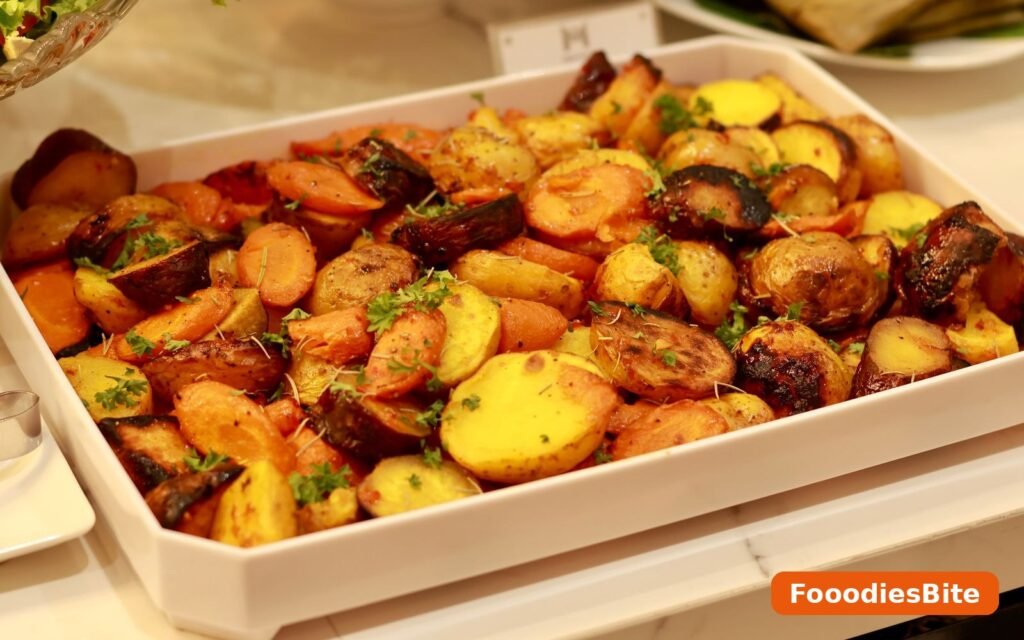
Ingredients (serves 4): 1 kg (about 2.2 lbs) floury potatoes, peeled and cut into even chunks; 1 tablespoon salt, for the boiling water; 3–4 tablespoons goose fat, duck fat, or oil; 1 teaspoon flaky sea salt, for finishing; 1/2 teaspoon black pepper; optional: 3 garlic cloves, lightly crushed; a few sprigs of rosemary or thyme.
Heat the oven to 220°C (425°F) and put a large, sturdy roasting tray in the oven with the fat in it, so the fat heats up while you prepare the potatoes. Put the potato chunks in a large pan, cover with cold water, add a tablespoon of salt, and bring to a boil. The salt in the water seasons the potatoes from the inside, which makes a bigger difference than you might expect. Boil for seven to eight minutes, until the outside is just tender and the edges are starting to soften — a knife should go in with a little resistance, not slide straight through.
Drain the potatoes in a colander and leave them to steam dry for two or three minutes, shaking the colander gently. Then put the lid back on the pan, or shake the colander firmly, and give the potatoes a good roughing up: shake them so they knock against each other and the surface turns fluffy and frayed. This is the step that creates the crust, so do not be gentle. If a few small bits break off, that is fine — those bits become the crispiest morsels on the tray.
Carefully take the hot tray from the oven — the fat should be shimmering — and tip the potatoes in, turning each piece so it is coated in fat. Spread them in a single layer with space between them, and season with pepper. Roast for twenty minutes, then turn each piece over and roast for another twenty to twenty-five minutes, until deep golden and crisp all over. If you are using garlic and herbs, add them for the last fifteen minutes so they flavour the potatoes without burning. Drain briefly on paper towels if you like, sprinkle with flaky salt, and serve immediately — roast potatoes wait for no one.
Flavour Variations
Once you have the basic method, the variations are almost endless, and they are a good way to match the potatoes to whatever else you are cooking. For a Mediterranean feel, toss the finished potatoes with lemon zest, chopped parsley, and a little grated Parmesan while they are still hot. The cheese melts slightly and the lemon lifts the richness beautifully. For a smoky version, add a teaspoon of smoked paprika and half a teaspoon of garlic powder to the potatoes before roasting, along with a pinch of cumin.
Herb potatoes are a classic for a reason: rosemary and thyme added in the last part of roasting give a fragrant, savoury flavour that suits roast chicken and lamb perfectly. Garlic, added whole and lightly crushed, roasts into sweet, soft cloves that are wonderful squeezed over the potatoes or eaten whole. For something with a bit of heat, toss the hot potatoes with chilli flakes and a squeeze of lime, or with a spoonful of harissa loosened with olive oil.
You can also change the shape. Smashed potatoes — boiled whole until tender, squashed flat with a fork, then roasted with oil until crisp — are a fun variation that gives even more crunchy surface area. Potato wedges, cut thick and roasted the same way, are brilliant with dips and make a great side for burgers or grilled chicken. And if you want a lighter version, the same parboil-and-roast method works in an air fryer at 200°C (400°F) for about twenty minutes, shaking the basket halfway through — a useful option when the oven is busy, and one that pairs well with the air fryer chicken tenders without breadcrumbs on this site.
Serving Ideas
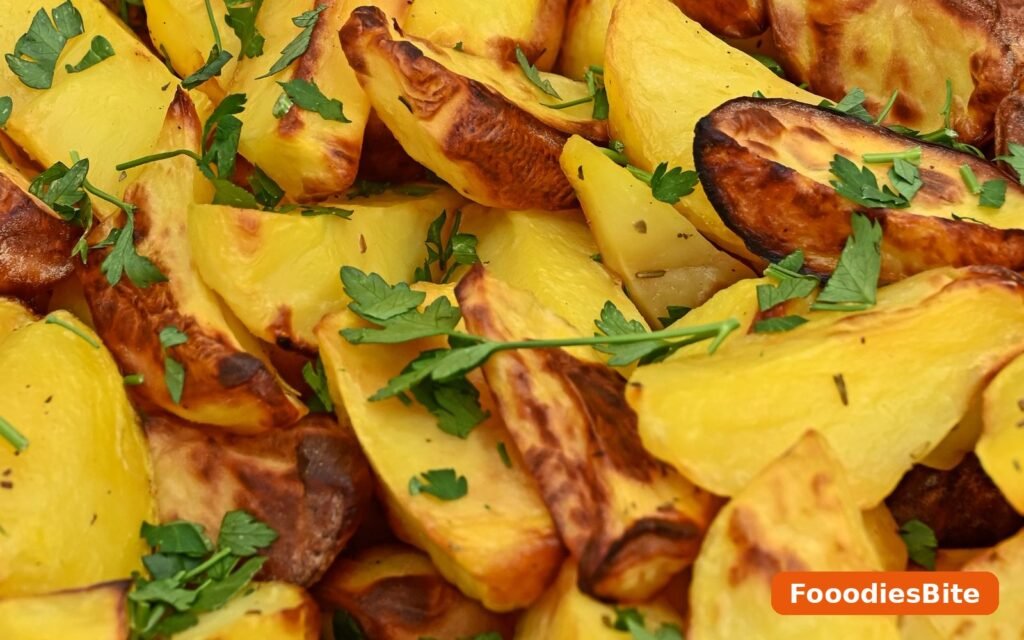
Crispy potatoes are the side dish that rarely needs a partner, but they do have natural friends. With roast chicken, they are a non-negotiable part of the plate, along with gravy made from the pan juices. With grilled fish or a simple piece of steak, they add the hearty, comforting element that a salad alone cannot provide. And with a fried or poached egg and some sautéed greens, they make a dinner that feels far more substantial than the effort involved.
Dips turn roast potatoes into a snack or a party food. A garlic mayonnaise, a yoghurt and herb dip, or a simple tomato salsa all work well, and a bowl of potatoes with dips is a genuinely good thing to put out when friends come round. For a more complete meal, serve them alongside roasted vegetables and a grain salad, or pile them into a bowl with shredded chicken, a crunchy slaw, and a drizzle of hot sauce — a sort of deconstructed roast dinner that is far easier than it sounds.
Leftovers, if you have any, are best reheated in a hot oven or air fryer rather than the microwave, which will make them soft. Spread them in a single layer, roast at 200°C (400°F) for ten minutes, and they will crisp up again surprisingly well. Cold roast potatoes, chopped into a salad or a frittata, are also quietly delicious, though in my house they rarely survive long enough to find out.
Troubleshooting: Why Were My Potatoes Not Crispy?
If your potatoes came out soft, run through this checklist. Were they crowded on the tray? Was the oven hot enough, and was it fully preheated? Were the potatoes properly dried after boiling? Did you rough up the surface? Was the fat hot when they went in? In my experience, one of those five is almost always the answer, and fixing it transforms the result.
Another common issue is turning the potatoes too early or too often. If you try to flip a potato before it has formed a crust, it will stick and tear, leaving the crust behind on the tray. Wait until it releases easily — properly browned potatoes lift off the tray with little resistance. And if the potatoes are golden on top but pale underneath, your tray may be too high in the oven, or the fat may have pooled on one side. A sturdy tray, a middle or lower shelf, and an even layer of fat will sort that out.
Ovens vary, and so do potatoes, so treat the timings in this recipe as a guide rather than gospel. Check at the twenty-minute mark, turn them, and then judge by colour and sound rather than the clock. Deep golden, crisp to the touch, and sounding hollow when tapped — that is done. Pale and soft is not done yet, whatever the timer says. The science of why this works is nicely explained in the background on the potato, and for general roasting technique the guides at Serious Eats are worth a look.
Storing and Reheating
Roast potatoes are best eaten fresh, within minutes of leaving the oven, and no honest recipe will tell you otherwise. But life is not always that convenient, and leftovers can be rescued. Cool them completely, store in an airtight container in the fridge for up to three days, and reheat as described above in a hot oven or air fryer. They will not be quite as crisp as fresh, but they will be far better than microwaved.
You can also do the parboiling ahead of time. Parboil, rough up, and cool the potatoes, then keep them covered in the fridge for up to a day. When you are ready to cook, tip them into hot fat and roast as usual — they may need a few extra minutes, since they are starting cold. This is a genuinely useful trick for a big roast dinner, when oven space and timing are both under pressure, and it takes one job off your plate at the busiest moment.
For a full meal idea, pair these potatoes with the easy chicken recipes without breading on this site — the two together make a dinner that feels complete without a breadcrumb in sight. And if you want more sides to round out the table, the FooodiesBite homepage is a good place to start browsing.
Frequently Asked Questions
Do I really need to parboil potatoes before roasting?
Yes, for the best results. Parboiling cooks the inside partway and softens the surface so you can rough it up, which creates the crust. Potatoes roasted from raw can still be good, especially if cut small, but they rarely get as fluffy inside or as crisp outside as parboiled ones. Seven to eight minutes in boiling salted water is enough — you want the edges soft, not the whole potato falling apart.
Why do my roast potatoes stick to the tray?
Usually because the tray or fat was not hot enough when the potatoes went in, or because you tried to turn them before a crust had formed. Preheat the tray with the fat until it shimmers, and wait until the potatoes release easily before flipping. A sturdy metal tray also helps; thin trays warp and create hot spots where potatoes catch.
Can I make crispy potatoes in the air fryer?
Yes. Parboil and rough up the potatoes as usual, toss them in a tablespoon or two of oil, and air fry at 200°C (400°F) for about twenty minutes, shaking the basket halfway through. You will need to cook in batches if your basket is small, since crowding prevents crisping. The result is very close to oven-roasted, with less fat and a faster cooking time.
Which potatoes are best for roasting?
Floury varieties are best: Maris Piper or King Edward in the UK, Russets in the US. Their high starch content gives a fluffy interior and a craggy, crisp exterior. Waxy potatoes will roast, but they stay denser and less fluffy. If you are not sure what you have, a floury potato will usually feel dry and rough-skinned, while a waxy one feels smooth and firm.
Can I prepare roast potatoes ahead of time?
Yes. Parboil, drain, rough up, and cool them, then refrigerate covered for up to a day. Roast from cold in hot fat, allowing a few extra minutes. You can also fully roast them and reheat in a hot oven or air fryer, though fresh is always best. Avoid microwaving, which makes them soft.
How much oil should I use?
About three to four tablespoons for a kilogram of potatoes is a good starting point. The potatoes should be well coated and glistening, and there should be a thin layer of fat on the tray, but they should not be swimming. Too little fat gives dry, patchy potatoes; too much gives greasy ones. A hot tray helps the fat go further, since it coats the surface quickly instead of soaking in.
Pingback: 47 Small Batch Chocolate Chip Cookies Without Brown Sugar – FooodiesBite
Pingback: Air Fryer Buffalo Cauliflower Bites – FooodiesBite
Pingback: Air Fryer Sweet Potato Wedges with Smoky Dipping Sauce – FooodiesBite
Pingback: Garlic Roasted Green Beans with Almonds – FooodiesBite