
There are side dishes you plan carefully, and then there are the ones that quietly steal the meal. Creamy coleslaw with apple and carrot belongs firmly in the second group. It takes twenty minutes, needs no cooking at all, and somehow makes everything next to it taste better. The cabbage stays crisp, the carrot adds sweetness and colour, and the apple brings a fresh, tart crunch that lifts the whole bowl out of the ordinary. It is the kind of salad people spoon onto their plates without thinking, then go back for more.
Most of us have met a disappointing coleslaw at some point. It was either drowned in dressing until it turned soupy, or left so dry that it tasted like plain shredded cabbage. Sometimes it had sat too long and gone limp, or the dressing was so sweet it tasted like dessert. This recipe avoids all of those traps. The dressing is creamy but not heavy, tangy enough to wake up the vegetables, and just sweet enough to balance the apple. And because the vegetables are cut properly and dressed at the right time, the slaw stays crunchy for hours, which is exactly what you want from a make-ahead side.
The apple is the quiet hero here. A crisp, tart apple like Granny Smith or Braeburn does two jobs at once. It adds sweetness without needing much sugar in the dressing, and its firm flesh holds its crunch even after an hour in the fridge. Carrot, grated coarsely rather than finely, adds colour and a gentle earthy sweetness, while a mix of green and red cabbage gives the bowl a beautiful, confetti-like look. A little red onion, sliced very thin, adds a savoury edge, and fresh herbs at the end keep everything tasting bright rather than heavy.
What I love most about this coleslaw is how useful it is. It works at a summer barbecue next to grilled chicken, piled into a burger, or spooned alongside a pork roast on a cold evening. It travels well to picnics, holds up on a buffet table, and makes excellent leftovers for sandwiches the next day. Once you have the dressing ratio memorised, you can make it without a recipe at all, adjusting the tang and sweetness to suit whatever you are serving it with.
Why You Will Love This Recipe
First, it is genuinely quick. There is no cooking, no waiting for anything to cool, and no special equipment beyond a knife, a grater, and a bowl. If you use a food processor with a shredding disc, the whole thing comes together in under ten minutes. Even by hand, with a sharp knife and a box grater, you are still only looking at about twenty minutes of relaxed prep. That speed makes it a perfect last-minute side when guests are on their way and you need something fresh on the table fast.
Second, the texture is exactly right. Good coleslaw should crunch. It should not collapse into a wet pile, and it should not feel like you are eating plain raw cabbage either. Here, the dressing coats rather than soaks, the vegetables are cut thick enough to keep their bite, and a short rest in the fridge lets the flavours meld without turning anything soggy. The apple, added near the end, stays crisp and provides little bursts of sweetness throughout.
Third, it is a crowd-pleaser that suits almost everyone. It is naturally gluten-free, easy to make vegetarian, and simple to adapt for different tastes. Kids often like the sweetness of the apple and carrot, while adults appreciate the tangy dressing and the fresh herbs. If you are feeding a mixed group, this is a safe, cheerful choice that rarely leaves leftovers, and when it does, those leftovers are arguably even better the next day.
Finally, it is flexible and forgiving. Out of red cabbage? Use all green. No fresh herbs? Skip them or use a pinch of celery seed instead. Prefer a lighter dressing? Swap half the mayonnaise for Greek yoghurt. The recipe below is the version I make most often, but it is built to bend, and I will walk you through the swaps that work and the ones to avoid.
Ingredients You Will Need
Freshness matters more than anything else in a raw salad, so choose cabbage heads that feel heavy and firm, with crisp outer leaves and no brown spots. The apple should be firm and unbruised, because a soft apple will turn mushy in the dressing. Carrots should snap cleanly and taste sweet when you nibble a piece raw. If your carrots taste woody or bitter, they will not improve in the slaw.
- 4 cups green cabbage, finely shredded (about 1/2 medium head)
- 2 cups red cabbage, finely shredded (about 1/4 medium head)
- 2 medium carrots, peeled and coarsely grated
- 1 large crisp apple (Granny Smith or Braeburn), julienned or coarsely grated
- 1/4 small red onion, very thinly sliced
- 3/4 cup mayonnaise
- 2 tablespoons apple cider vinegar
- 1 tablespoon lemon juice, freshly squeezed
- 1 tablespoon honey or sugar
- 1 teaspoon Dijon mustard
- 1/2 teaspoon fine sea salt, plus more to taste
- 1/4 teaspoon black pepper, freshly ground
- 1/4 teaspoon celery seed, optional
- 2 tablespoons chopped fresh parsley or dill
A note on shredding: the cut really does affect the eating experience. Very fine shreds turn soft quickly, while thick, chunky pieces feel raw and awkward. Aim for shreds about the width of a matchstick, or a little thinner, and grate the carrot coarsely so it keeps some bite. If you are using a food processor, use the shredding disc for the cabbage and the coarse grating disc for the carrot, and work in batches so the vegetables do not get crushed. For the apple, julienne gives the prettiest result, but coarse grating works too and distributes the apple flavour more evenly. Toss the cut apple with the lemon juice straight away to stop it browning.
For more vegetable sides in this style, take a look at the Sides & Vegetables collection on FooodiesBite, where crisp, practical sides like this one sit alongside roasted and baked options.
How to Make Creamy Coleslaw with Apple and Carrot
Start with the dressing, because it needs a few minutes for its flavours to come together. In a large bowl, whisk the mayonnaise, apple cider vinegar, lemon juice, honey, Dijon mustard, salt, pepper, and celery seed if you are using it, until smooth and creamy. Taste it now, before it meets the vegetables. It should taste a little bolder than you think it needs to be, because the cabbage will mellow it. If it tastes flat, add a splash more vinegar. If it tastes sharp, add a pinch more honey. This is your chance to adjust, and it is much easier now than after everything is mixed.
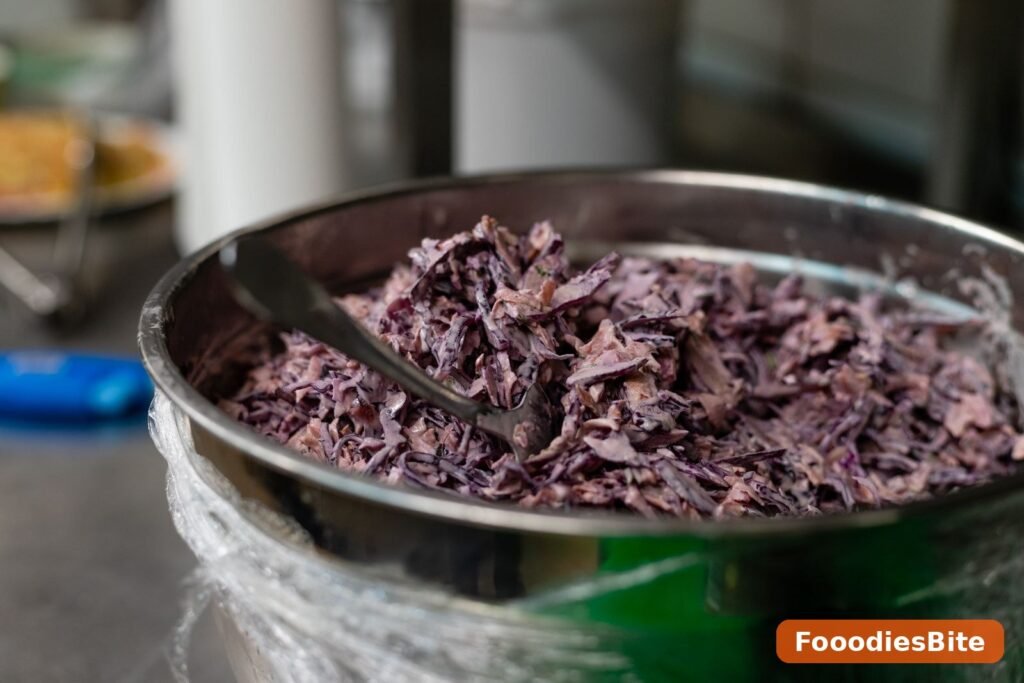
Add the shredded green and red cabbage, the grated carrot, and the sliced red onion to the bowl. Toss thoroughly with tongs or two large spoons, making sure every shred gets a light coating of dressing. Now add the apple, which you have already tossed with a little lemon juice, and fold it in gently. The reason for adding the apple last is simple: it keeps its crunch and colour better when it spends less time sitting in the dressing, and it stays distributed evenly instead of sinking to the bottom.
Cover the bowl and refrigerate for at least thirty minutes before serving, and up to four hours for the best flavour. During this rest, the cabbage softens just slightly, the dressing seeps into the shreds, and the whole salad becomes more cohesive. Give it a good toss before serving, taste again, and adjust the salt, vinegar, or honey as needed. Finish with the chopped parsley or dill scattered over the top. Serve chilled or at cool room temperature, but do not leave it sitting out in warm weather for more than a couple of hours.
One mistake to avoid is overdressing. It is tempting to add extra dressing for a creamier result, but too much dressing is what makes coleslaw soupy. The amount in this recipe coats generously without pooling at the bottom of the bowl. If you like a very creamy slaw, add an extra tablespoon or two of mayonnaise, but do it gradually, tossing and checking as you go. You can always add more dressing, but you cannot take it away once the vegetables are swimming.
Tips for Crunch That Lasts
The secret to coleslaw that stays crisp is managing water. Cabbage releases moisture over time, especially once salt is added, and that moisture thins the dressing and softens the shreds. A short rest of thirty minutes to a few hours is ideal. Beyond that, the slaw is still tasty, but it will be softer, and you may want to drain off any liquid that collects at the bottom before serving, then toss with a spoonful of fresh dressing to revive it.
If you need to make the slaw a full day ahead, there is a trick that helps. Salt the shredded cabbage lightly, let it sit in a colander for about an hour, then squeeze out the excess water with clean hands or a kitchen towel before mixing with the dressing. This draws out moisture in advance, so the finished slaw stays crisper for longer. It is an extra step, but it is worth it for a party or a picnic where the slaw might sit for a while. You can also keep the dressing separate and toss everything together an hour before serving, which is the most reliable method of all for maximum crunch.
Cutting matters too. A sharp knife is essential. A dull knife crushes cabbage cells, which releases more water and makes the slaw soggy faster. If your knife skills are rusty, a mandoline with a guard, or the shredding disc of a food processor, will give you clean, even shreds with far less effort. And keep everything cold. Cold vegetables stay crisper than warm ones, so refrigerate the shredded cabbage while you make the dressing, and chill the serving bowl if you have time.
Coleslaw itself has an interesting background, and reading about coleslaw shows how many countries have their own version of shredded cabbage salad, from creamy American styles to lighter vinegar-based ones.
Variations to Try
Once you know the base recipe, the variations are almost endless. For a lighter, tangier slaw, replace half the mayonnaise with Greek yoghurt or sour cream. The result is still creamy, but fresher and lower in fat, and it pairs especially well with spicy food. For a smoky barbecue version, add a teaspoon of smoked paprika and a pinch of cayenne to the dressing, and swap the parsley for chopped coriander. This version is fantastic piled onto pulled pork sandwiches.
For an autumn feel, add a handful of toasted walnuts or pecans, a few dried cranberries, and a little extra apple. The nuts bring crunch, the cranberries bring tart sweetness, and the whole bowl starts to taste like fall. For a fresh, herby summer version, add grated courgette (squeezed dry first), lots of dill and mint, and a little extra lemon zest. And if you like heat, finely diced jalapeño or a spoonful of sriracha stirred into the dressing gives the slaw a pleasant kick without overwhelming the apple.
You can also change the fruit. Pear, julienned like the apple, is lovely in winter, while mango adds a tropical sweetness in summer. Just keep the same rule: firm fruit, cut at the last minute, tossed with lemon juice to prevent browning. The cabbage and carrot base is sturdy enough to carry almost any crisp fruit, so use whatever is in season and tastes good to you.
Serving Ideas
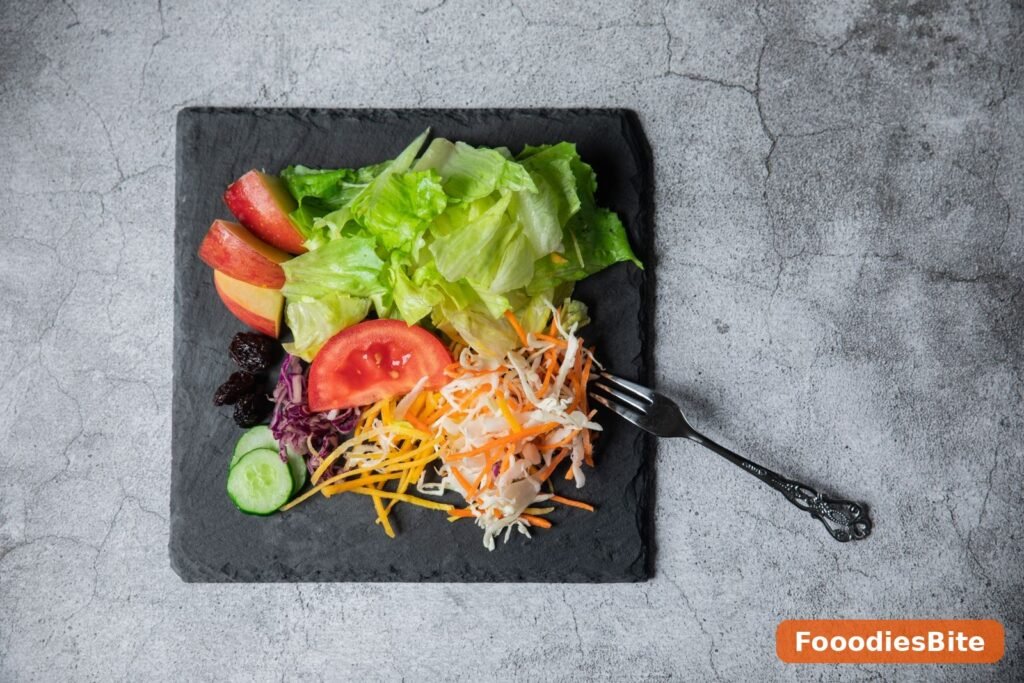
This coleslaw is at its best next to food with a bit of richness or spice, because its cool crunch provides contrast. At a barbecue, serve it alongside grilled chicken, sausages, or burgers, where it cuts through smoky, fatty flavours and refreshes the palate between bites. Piled directly into a burger or a pulled pork sandwich, it adds texture and tang that a plain lettuce leaf simply cannot match. It is also the classic partner for fried chicken, where the cool, creamy slaw balances the hot, crispy coating beautifully.
For a lighter meal, serve the slaw with grilled fish or a simple omelette, plus some crusty bread or boiled new potatoes. The slaw brings the salad element, the fish or eggs bring protein, and the potatoes make the meal filling. It also works brilliantly as part of a picnic spread, next to cold meats, cheese, pickles, and a loaf of good bread. Because it needs no reheating and actually improves after a short rest, it is one of the least stressful dishes you can take to a gathering.
If you are building a full dinner around it, think about contrast. Something hot and savoury, something starchy, and this cool, crunchy slaw makes a complete plate. For a busy-night main that pairs well, the easy dinner recipes with frozen vegetables collection has quick ideas that sit nicely next to a fresh salad like this one. And if you want a crisp side from another angle, the air fryer recipes collection offers crunchy dishes that contrast beautifully with a cool slaw.
Storage and Make-Ahead Tips
Stored in an airtight container in the fridge, this coleslaw keeps for two to three days. It will soften gradually, but the flavour remains good, and day-two slaw is excellent in sandwiches and wraps, where a slightly softer texture is actually an advantage. Stir it well before serving, drain off any excess liquid, and add a squeeze of lemon or a spoonful of fresh dressing to brighten it up. Do not freeze coleslaw. The cabbage turns limp and watery on thawing, and the mayonnaise dressing separates, so the result is unpleasant no matter how carefully you freeze it.
For make-ahead planning, the best approach is to prep the components separately. Shred the cabbage and grate the carrot up to two days ahead, and store them in separate airtight containers or bags in the fridge. Make the dressing up to three days ahead and keep it chilled. Cut the apple on the day you serve, toss it with lemon juice, and combine everything an hour or two before eating. This way you get the convenience of advance prep with the crunch of a freshly made salad, which is the best of both worlds.
If you are taking the slaw to a picnic or a potluck, transport it in a chilled container, ideally in a cooler bag with an ice pack, and keep it out of direct sun. Mayonnaise-based salads should not sit at warm temperatures for long, so serve it, enjoy it, and return leftovers to the fridge promptly. A chilled serving bowl helps too: pop the empty bowl in the freezer for fifteen minutes before you fill it, and the slaw will stay cool on the table for longer.
Frequently Asked Questions
Can I make coleslaw without mayonnaise?
Yes, absolutely. A yoghurt-based dressing made with Greek yoghurt, lemon juice, a little olive oil, and mustard is fresh and tangy, and it works very well with the apple and carrot. A vinegar-based dressing with oil, vinegar, honey, and mustard is lighter still, and it keeps the slaw crisp for longer. The texture will be different from the creamy version, but the salad will still be delicious, so choose the style that suits your meal and your taste.
Why did my coleslaw go watery?
Watery coleslaw usually comes from one of three things: too much dressing, cabbage that released its moisture after sitting too long, or vegetables that were wet when mixed. To avoid it, dry the cabbage well, do not overdress, and serve within a few hours of mixing. If your slaw has already gone watery, drain the liquid, toss with a spoonful of fresh dressing, and serve it in sandwiches, where the extra moisture matters less.
Which apple is best for coleslaw?
A firm, tart apple is best. Granny Smith is the classic choice because it stays crisp and its tartness balances the creamy dressing. Braeburn, Honeycrisp, and Pink Lady also work well, as long as they are firm and fresh. Avoid soft, mealy apples like Red Delicious that have been stored too long, because they will turn mushy in the salad. Taste a slice raw first: if it crunches and tastes bright, it will be good in the slaw.
How long can coleslaw sit out at a barbecue?
In warm weather, keep it to about two hours at most, and less if the temperature is above 30°C. Keep the bowl in the shade, set it on ice if you can, and return it to the fridge between servings. If you are unsure how long it has been out, it is safer to discard it than to risk it, especially with a mayonnaise-based dressing. For longer outdoor events, serve the slaw in smaller batches, refilling from a chilled container kept in a cooler.
Can I use bagged shredded cabbage?
Yes, bagged cabbage is a fine shortcut, and it saves a lot of prep time. Look for a mix that is fresh and crisp, with no brown edges or damp patches in the bag. You may still want to add fresh grated carrot and apple yourself, since bagged mixes do not include them, and the apple is what makes this version special. Rinse and dry the bagged cabbage if it looks at all damp, then proceed with the recipe as written.
Is this coleslaw good the next day?
It is very good the next day, though softer than when freshly made. The flavours actually deepen overnight, and the apple and carrot hold up well. Stir it, drain any liquid, and refresh it with lemon juice or a little extra dressing before serving. It makes a wonderful sandwich filling the next day, especially with cold chicken or cheese. For more fresh side ideas, browse the FooodiesBite homepage, and if you want another take on creamy salads, Taste of Home’s coleslaw recipes offer plenty of inspiration.