
Introduction
If there is one recipe that converted me to the air fryer, it is this one. Not chips, not reheated leftovers, but chicken thighs: skin crisp enough to hear, meat so juicy it barely needs a sauce, and a whole dinner ready in about half an hour with one basket to wash up. There is no breading to mix, no flour on the counter, no oil splattering across the hob. You season the thighs, you put them in the basket, and the hot air does the rest. It feels almost too easy, which is probably why I make these at least once a week.
Chicken thighs are the ideal cut for the air fryer, and it is worth understanding why. Unlike breasts, which dry out if you look at them wrong, thighs have enough fat and connective tissue to stay moist across a wide range of cooking times. The skin, when it is properly dried and given space, renders and crisps in hot circulating air in a way that is genuinely hard to achieve in a regular oven without a lot of fuss. Bone-in thighs are particularly good, because the bone insulates the meat and keeps it tender, but boneless thighs work beautifully too and cook a little faster.
This recipe is written for bone-in, skin-on thighs, since that is the version I make most often, but I have included timings for boneless thighs as well, so you can use whichever you have. There is a simple, all-purpose seasoning that works with almost anything, plus a handful of variations — lemon herb, smoky barbecue, spicy, and a honey soy glaze — so you can make the same basic recipe feel different from week to week. And because no dinner is complete without something to go with it, there are serving ideas and storage tips at the end, along with answers to the questions people ask me most about air fryer chicken.
Why Thighs Beat Breasts in the Air Fryer
It is not that air fryer chicken breasts cannot be good — they can, with careful timing — but thighs are simply more forgiving, and forgiveness matters on a busy night. A breast that overshoots by five minutes goes from juicy to dry in a way that no sauce fully rescues. A thigh that overshoots by five minutes is still juicy, still tender, and still delicious, because the fat and collagen in dark meat need more time to break down anyway. In fact, thighs are often at their best a little past the minimum safe temperature, around 175–185°F (80–85°C), where the connective tissue has melted into tenderness.
That forgiveness also makes thighs a better choice if you are still learning your air fryer. Every model runs a little differently — some hot, some with uneven airflow — and thighs give you a wider margin for error while you learn yours. They are also usually cheaper than breasts, which means you can afford to practise, and they reheat better the next day, crisping up again in the air fryer in just a few minutes. If you have had a disappointing air fryer breast experience and written the whole thing off, try thighs before you give up. They are a different story entirely.
Skin is the other reason thighs shine here. Skin-on chicken in an air fryer is a small miracle: the circulating hot air renders the fat out of the skin and crisps it from all sides, without the need for deep frying or a screaming-hot oven. The key is dryness — wet skin steams, dry skin crisps — so patting the thighs thoroughly dry before seasoning is the most important step in this recipe. It takes thirty seconds and makes all the difference. For more air fryer ideas, have a look at the air fryer recipes on FooodiesBite.
Choosing and Preparing Your Thighs
Look for thighs that are roughly similar in size, so they cook evenly. If one is much larger than the others, it will need longer, and you will end up with a mix of done and overdone. Bone-in, skin-on thighs are my default: they give the best flavour, the crispiest skin, and the juiciest meat. Boneless, skinless thighs are a good second choice, especially if you are short on time or plan to slice the chicken for wraps or salads — they cook in about eighteen to twenty minutes at a slightly lower temperature.
Preparation is simple but worth doing properly. Take the thighs out of the fridge twenty minutes before cooking, if you remember, so they are not ice cold going into a hot basket. Pat every surface dry with paper towels, including under the skin flap where moisture likes to hide. Trim any very large flaps of excess skin or fat if you like, but do not remove the skin entirely — it is doing important work, protecting the meat and crisping up beautifully. If the skin is very loose, tuck it neatly around the thigh so it cooks evenly rather than flapping about.
Seasoning can be as simple or as elaborate as you like. The all-purpose rub in this recipe — salt, pepper, garlic powder, onion powder, paprika, and a little dried thyme — is a reliable starting point that suits almost any side dish. Season generously and on both sides, and get a little seasoning under the skin if you can, since that is where it flavours the meat directly. A thin drizzle of oil helps the spices stick and encourages browning, but you only need a teaspoon or two; the skin itself provides most of the fat.
How to Make Chicken Thighs Without Breading in Air Fryer
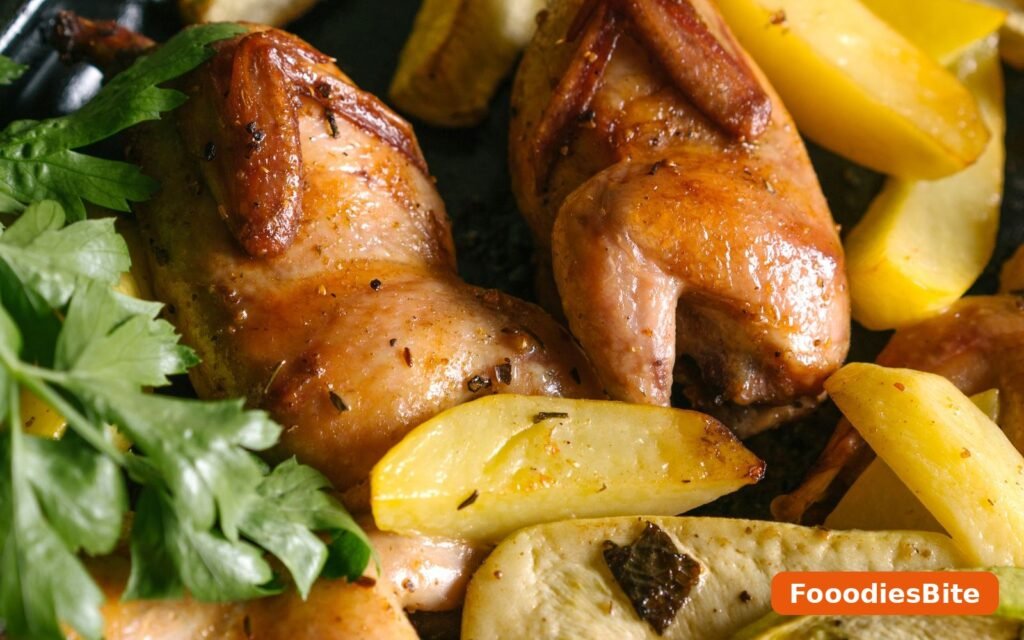
Ingredients (serves 4): 4 bone-in, skin-on chicken thighs (about 900g / 2 lbs total); 1 teaspoon salt; 1/2 teaspoon black pepper; 1 teaspoon garlic powder; 1 teaspoon onion powder; 1 teaspoon smoked paprika; 1/2 teaspoon dried thyme or oregano; 1 tablespoon olive oil; lemon wedges and fresh parsley, to serve.
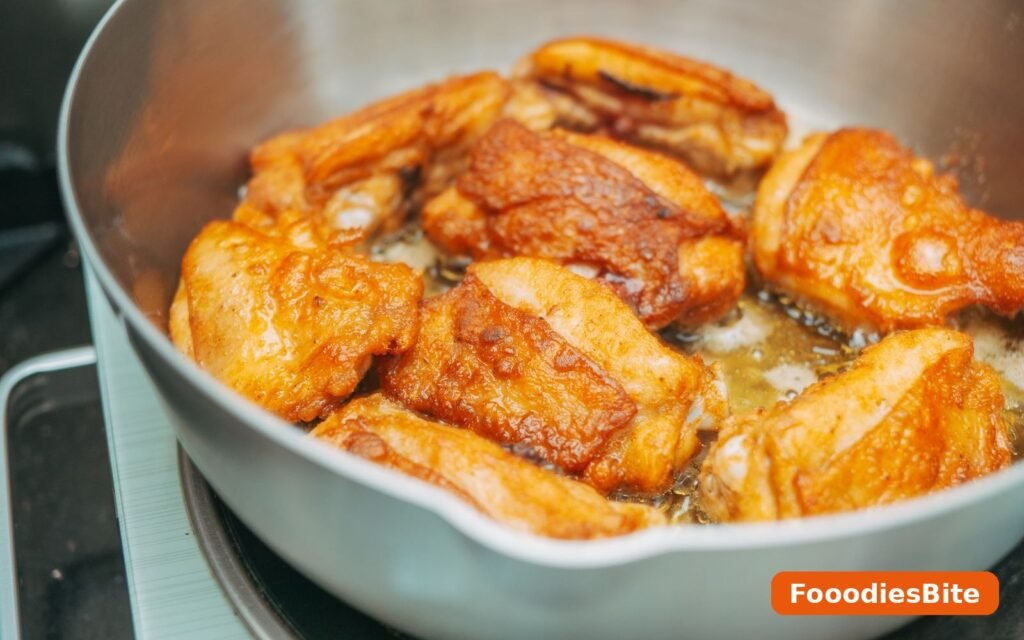
Pat the thighs completely dry with paper towels, on all sides and under the skin. Mix the salt, pepper, garlic powder, onion powder, paprika, and thyme together in a small bowl. Drizzle the thighs with the olive oil and rub the seasoning all over them, getting some under the skin where you can. Let them sit for ten minutes while the air fryer preheats — this short rest lets the salt start working its way in, and it is a good time to prepare a side dish or set the table.
Preheat the air fryer to 200°C (400°F) for three to five minutes. A preheated basket is important: cold metal cools the skin on contact and delays crisping, which is the opposite of what you want. Place the thighs in the basket skin-side down, in a single layer, with at least a centimetre of space between them. Air needs to circulate around each piece, and crowded thighs steam instead of crisping. If your basket is small, cook in two batches — it is better to wait a few extra minutes than to end up with soggy skin.
Cook skin-side down for twelve minutes. You will hear sizzling, and fat will start to render into the tray below, which is exactly right. Flip the thighs skin-side up and cook for another ten to thirteen minutes, until the skin is deep golden and crisp and a thermometer inserted into the thickest part, away from the bone, reads at least 165°F (74°C) — though, as mentioned, thighs are at their juiciest around 175–185°F (80–85°C), so do not panic if yours read higher. Rest the thighs for five minutes before serving, skin-side up so the skin stays crisp, and scatter with parsley and lemon wedges.
For boneless, skinless thighs, reduce the temperature to 190°C (375°F) and cook for eighteen to twenty minutes in total, flipping halfway through, until the internal temperature reaches 165°F (74°C). The method is otherwise identical, and the result is still wonderfully juicy, just without the crispy skin to show off.
Seasoning Variations
The all-purpose rub above is a great default, but thighs take on other flavours beautifully, and changing the seasoning is the easiest way to keep this recipe from feeling repetitive. For lemon herb thighs, replace the paprika with lemon zest and a teaspoon of dried oregano, and squeeze fresh lemon over the cooked thighs. For a smoky barbecue version, add a teaspoon of brown sugar, half a teaspoon of chilli powder, and a pinch of cumin to the rub, and brush with barbecue sauce in the last five minutes of cooking — any earlier and the sugar in the sauce will burn.
A spicy version works well with a teaspoon of Cajun or Creole seasoning in place of the paprika and thyme, served with a cooling yoghurt dip. For an Asian-inspired twist, marinate the thighs for thirty minutes in soy sauce, grated ginger, garlic, and a teaspoon of honey, then air fry as usual, brushing with the leftover marinade (boiled first, for safety) in the last few minutes. And for a Mediterranean feel, season with oregano, garlic, and lemon, and serve with olives, feta, and a tomato salad.
One caution: sugary marinades and sauces burn easily in the intense heat of an air fryer, so add them late, watch closely, and do not be surprised if a honey glaze needs a slightly lower temperature. Dry rubs, on the other hand, are almost foolproof, which is another reason they are my usual choice. The background on chicken as food gives useful context on why dark meat behaves the way it does, and the technique guides at Serious Eats are a good next step if you want to understand the science of crispy skin.
Serving Ideas
These thighs go with almost anything, which is part of their charm. My most common pairing is simple: roasted or air fryer potatoes, a green salad, and lemon wedges. The potatoes can go in the air fryer after the chicken, while it rests, and they pick up a little chicken flavour from the basket — not a bad thing at all. Rice, especially a lemony rice pilaf or a simple steamed rice with herbs, is another easy partner, and it soaks up any juices from the resting chicken beautifully.
For a lighter meal, serve the thighs sliced over a big salad with crunchy lettuce, cucumber, tomatoes, and a sharp dressing, or in warm flatbreads with pickled red onion, lettuce, and garlic yoghurt sauce. They are also excellent cold the next day, sliced into sandwiches or wraps, which makes them a useful cook-once-eat-twice dinner. If you are feeding a crowd, double the recipe and cook in batches, keeping the first batch warm in a low oven while the second cooks — the skin stays crisp far longer than you would expect.
A note on sauces: these thighs barely need one, but a good sauce never hurts. Chimichurri, garlic yoghurt, a simple pan gravy, or even just the resting juices spooned over the top are all excellent. Avoid very heavy sauces that smother the crisp skin; the point of this recipe is the contrast between crunchy skin and juicy meat, and a light, bright sauce preserves that better than a thick, creamy one.
Tips for the Crispiest Skin
Dry skin is the first rule, and it bears repeating: pat the thighs dry, really dry, before seasoning. If you have time, leave the uncovered thighs in the fridge for a few hours or overnight — the dry fridge air dries the skin further, and the result is noticeably crisper. This is the same principle behind dry-brining a roast chicken, and it works just as well on a smaller scale.
Do not crowd the basket, do not skip preheating, and do not flip the thighs more than once. Every time you open the basket, heat escapes and the skin’s progress stalls. Resist the urge to check every five minutes; trust the timings, and check once at the flip and once at the end. If the skin is not quite as crisp as you would like at the end of cooking, give it two or three extra minutes at the same temperature, watching closely — skin goes from golden to burnt faster than you think.
Finally, rest the thighs skin-side up, not skin-side down on a plate, where trapped steam will soften the skin you worked so hard to crisp. A wire rack is ideal if you have one, but a plate is fine as long as the skin is facing up and air can get to it. Five minutes of resting also lets the juices redistribute, so the meat is juicier when you cut into it. Patience, here as everywhere in cooking, is rewarded.
Storing, Reheating, and Leftovers
Cooked thighs keep in the fridge for three to four days in a sealed container. To reheat, put them back in the air fryer at 190°C (375°F) for four to five minutes — this crisps the skin again in a way the microwave simply cannot match. Microwaving will heat them, but the skin will go soft, and you will lose the best part of the dish. For that reason, I almost always reheat in the air fryer, even if it takes a few minutes longer.
Leftover thighs are wonderfully versatile. Slice them for sandwiches and wraps, shred them into soups or grain bowls, or chop them into a fried rice. They also freeze well for up to three months: cool completely, wrap tightly, and thaw overnight in the fridge before reheating. If you are cooking for one or two, making a full batch and freezing half is a smart move — future dinners practically make themselves.
If you liked this recipe, the air fryer chicken tenders without breadcrumbs are a natural companion piece, and the easy chicken recipes without breading collection has plenty more unbreaded ideas. For everything new on the site, start at the FooodiesBite homepage.
Frequently Asked Questions
Do I need to preheat the air fryer for chicken thighs?
Yes, it makes a real difference. A preheated basket crisps the skin from the moment the chicken goes in, while a cold basket cools the skin and delays browning. Three to five minutes at the cooking temperature is enough. Think of it like preheating an oven — you would not put a roast into a cold oven, and the same logic applies here.
What temperature should chicken thighs reach?
The safe minimum is 165°F (74°C) in the thickest part, away from the bone. Thighs, however, are often juicier and more tender at 175–185°F (80–85°C), where connective tissue breaks down. Do not be alarmed by a higher reading; with thighs, it usually means more tender meat, not dry meat, which is the opposite of what happens with breasts.
Why is my chicken skin not crispy?
The usual reasons are wet skin, a crowded basket, or not enough heat. Pat the thighs very dry, cook in a single layer with space between pieces, and make sure the air fryer is preheated. Leaving uncovered thighs in the fridge for a few hours before cooking also dries the skin and improves crispness noticeably.
Can I cook frozen chicken thighs in the air fryer?
It is best to thaw them fully first, in the fridge overnight. Cooking from frozen leads to uneven cooking and makes it hard to get crisp skin, since the surface stays wet for much longer. If you are in a hurry, thaw in cold water, changing the water every thirty minutes, and pat the thighs very dry before seasoning.
How do I stop the air fryer from smoking?
A little smoke is usually caused by fat dripping onto the heating element. Make sure the drip tray is clean before you start, and if your model is prone to smoking, add a tablespoon of water to the drip tray or a slice of bread under the basket to catch fat. Trimming very large flaps of excess fat from the thighs also helps, without removing the skin itself.
Can I use boneless thighs instead?
Yes. Boneless, skinless thighs cook faster — about eighteen to twenty minutes at 190°C (375°F), flipping halfway — and are still juicy and flavourful. Boneless, skin-on thighs are also excellent if you can find them, giving you the best of both worlds: faster cooking and crispy skin.
Pingback: 36 Air Fryer Chicken Tenders Without Breadcrumbs – FooodiesBite
Pingback: Crispy Air Fryer Chicken Parmesan – FooodiesBite