
There is a reason cheesy scalloped potatoes show up at holidays, Sunday dinners, and every potluck worth attending. They are warm, creamy, golden on top, and deeply comforting in a way that few side dishes manage. Thin slices of potato soften in a rich cheese sauce, the top turns bubbling and browned, and the edges of the dish, where the sauce caramelises against the pan, are the pieces everyone quietly fights over. It is not a light dish, and it is not trying to be. It is a celebration dish, and it earns its place on the table.
The difference between good scalloped potatoes and a disappointing tray comes down to a few things: the thickness of the slices, the richness of the sauce, and the patience to let the dish rest before serving. Slice the potatoes too thick, and they stay firm in the middle while the sauce overcooks. Make the sauce too thin, and it turns watery. Cut into the dish too soon, and the sauce runs everywhere instead of settling into creamy layers. Get those three things right, and you have a dish that slices cleanly, tastes rich without being greasy, and makes the whole meal feel special.
This version uses a simple cheese sauce made with butter, garlic, milk, cream, and a good melting cheese, layered with thinly sliced potatoes and baked until tender and golden. It does not rely on canned soup, and it does not need any unusual ingredients. The sauce is seasoned well, with mustard and a little nutmeg for depth, and the cheese is a mix of sharp cheddar for flavour and a milder melting cheese for creaminess. The result is a dish that tastes homemade in the best sense: rich, honest, and made with care.
It is also a wonderfully practical dish for feeding a crowd. It serves eight generously, it can be assembled ahead, and it reheats well, which makes it ideal for holidays when oven space and timing are tight. You can put it in the oven and get on with the rest of the meal, checking it occasionally, and it will be ready when you need it. And if there are leftovers, they are arguably even better the next day, sliced cold and fried gently in a pan until crisp at the edges.
Why You Will Love This Recipe
First, the texture is exactly what scalloped potatoes should be. The potatoes are tender all the way through, with no crunchy raw centres, and the sauce is thick and creamy, coating every slice without being gluey. The top is golden and slightly crisp, with browned cheese in spots, while the layers underneath stay soft and luscious. Cutting into the dish reveals distinct, beautiful layers, which is satisfying in a way that mashed potatoes, for all their comfort, never quite manage.
Second, the flavour is rich but balanced. Sharp cheddar brings a tangy depth, garlic adds warmth, mustard adds a subtle sharpness that cuts through the cream, and nutmeg adds a faint, warm background note that makes the sauce taste more complex than it is. None of these flavours shout. They work together quietly, so the potatoes themselves still taste like potatoes, just the most indulgent version of themselves. A little salt and plenty of black pepper keep the richness from feeling flat.
Third, it is a reliable crowd-pleaser. Children love the cheesy top, adults love the creamy layers, and everyone loves the crispy edge pieces. It suits picky eaters and adventurous ones alike, because there is nothing unusual or challenging in it, just familiar flavours done well. If you are cooking for a group with mixed tastes, this is one of the safest and most rewarding dishes you can put on the table.
Finally, it is make-ahead friendly, which is a gift on a busy cooking day. You can assemble the whole dish the day before, refrigerate it, and bake it when you need it, adding a little extra time to account for the cold dish. You can also bake it fully ahead and reheat it, and it will still taste wonderful. That flexibility, combined with how impressive it looks coming out of the oven, makes it a recipe worth learning by heart.
Ingredients You Will Need
Potato choice matters here more than in many recipes. Starchy potatoes like Russets break down a little during baking, which helps thicken the sauce, but they can also turn mushy if overcooked. Waxy potatoes hold their shape beautifully but can stay a little firm. My favourite compromise is Yukon Golds, which are medium-starchy, hold their shape well, and have a naturally buttery flavour that suits a cheese sauce perfectly. If you can only find Russets, they will still work; just watch the baking time and do not overbake.
- 2.5 pounds (about 1.1 kg) Yukon Gold potatoes, peeled and thinly sliced
- 3 tablespoons butter
- 3 cloves garlic, minced
- 3 tablespoons plain flour
- 1.5 cups whole milk
- 1 cup double cream (heavy cream)
- 1 teaspoon Dijon mustard
- 1/4 teaspoon ground nutmeg
- 1 teaspoon fine sea salt, plus more to taste
- 1/2 teaspoon black pepper, freshly ground
- 2 cups grated sharp cheddar cheese, divided
- 1 cup grated Gruyère or mozzarella cheese
- 2 tablespoons chopped fresh chives or parsley, for serving
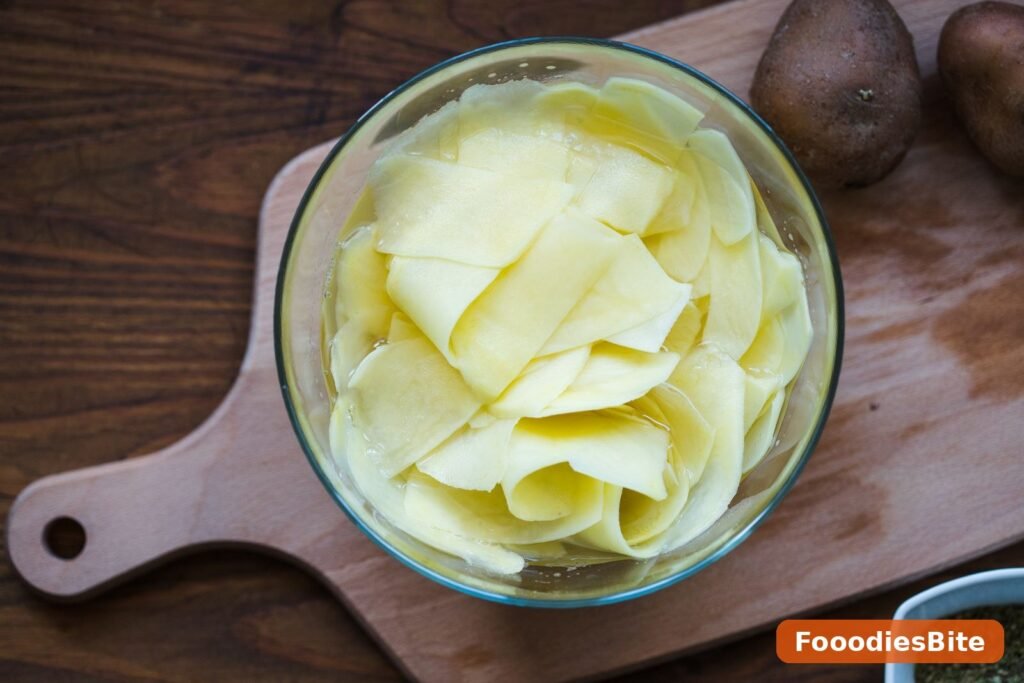
A note on slicing: aim for slices about 3 millimetres thick, roughly the thickness of a coin. A mandoline slicer makes this fast and even, and evenness matters, because slices of different thicknesses cook at different rates. If you are slicing by hand, take your time and try to keep the slices consistent. You do not need to rinse the sliced potatoes, and in fact you should not, because the surface starch helps thicken the sauce. Just keep them in a bowl of cold water only if you are slicing well ahead, and drain and pat them dry before layering.
For the cheese, grate it yourself if you can. Pre-grated cheese is coated with anti-caking agents that can make a sauce grainy, while freshly grated cheese melts smoothly and tastes better. Sharp cheddar gives the sauce its character, so do not substitute a mild cheddar unless you also add extra seasoning. Gruyère adds a nutty, savoury depth and melts beautifully, while mozzarella gives you stretch and creaminess. Either works, so use whichever you prefer or can find easily.
For more vegetable sides to round out a meal, the Sides & Vegetables collection on FooodiesBite has plenty of options, from crisp salads to roasted dishes.
How to Make Cheesy Scalloped Potatoes
Heat your oven to 375°F (190°C) and butter a large baking dish, about 9 by 13 inches. While the oven heats, make the cheese sauce. Melt the butter in a medium saucepan over medium heat, add the garlic, and cook for about a minute until fragrant but not browned. Sprinkle in the flour and whisk constantly for a minute or two, until the mixture smells nutty and turns a pale golden colour. This cooked flour and butter base, known as a roux, is what thickens the sauce.
Pour in the milk and cream gradually, whisking constantly to avoid lumps, then add the mustard, nutmeg, salt, and pepper. Bring the sauce to a gentle simmer, stirring often, and cook for three to four minutes until it thickens enough to coat the back of a spoon. Take the pan off the heat and stir in one and a half cups of the cheddar and all of the Gruyère or mozzarella, a handful at a time, stirring until each addition melts before adding the next. Taste the sauce and adjust the salt and pepper. It should taste well-seasoned on its own, because the potatoes will dilute it slightly as they cook.
Now layer the dish. Arrange a third of the potato slices in the buttered dish, overlapping them slightly like shingles on a roof. Spoon over a third of the cheese sauce, spreading it evenly. Repeat with another third of the potatoes and sauce, then finish with the last third of the potatoes and the remaining sauce. Sprinkle the reserved half cup of cheddar over the top. Cover the dish tightly with foil and bake for forty-five minutes. The foil traps steam and helps the potatoes cook through without the top browning too soon.
Remove the foil and bake for another twenty-five to thirty-five minutes, until the potatoes are completely tender when pierced with a knife in the centre, and the top is golden and bubbling. If the top browns before the potatoes are tender, cover it loosely with foil again and continue baking. If the potatoes are tender but the top is pale, slide the dish under the grill for two to three minutes, watching closely, until it browns. Let the dish rest for at least fifteen minutes before serving. This rest is essential. It lets the sauce thicken and set, so the potatoes slice cleanly instead of collapsing into a puddle. Scatter over the chives or parsley just before serving.
One common worry is whether the potatoes are truly done in the centre. The knife test is your best friend here. Push a thin knife into the very centre of the dish, through all the layers. It should slide in with no resistance at all. If you feel any firmness, give the dish another ten minutes, covered, and test again. Undercooked scalloped potatoes are the most common disappointment with this dish, and a few extra minutes in the oven will always fix them, while serving them early cannot be undone.
Tips for a Creamy, Never Watery Sauce
Watery scalloped potatoes usually come from one of a few causes, and all of them are avoidable. The first is sauce that was too thin to start with. Your sauce should be noticeably thick before it goes into the dish, coating a spoon heavily, because the potatoes release moisture as they bake and will thin it further. If your sauce seems thin, simmer it for a couple more minutes before adding the cheese. The second cause is underbaking. Potatoes need a full, long bake to release their starch and thicken the sauce around them. A dish pulled too early will look set on top but runny underneath.
The third cause is cutting too soon. A hot dish straight from the oven always looks looser than it will after resting. Fifteen minutes of rest lets the sauce settle and thicken dramatically, and the difference between a dish cut at five minutes and one cut at fifteen is striking. The fourth cause is using low-fat milk or cheese, which do not thicken or melt as reliably. Whole milk, real cream, and full-fat cheese are not just indulgences here; they are structural, and they are what make the sauce work. If you want a lighter version, it is better to serve a smaller portion alongside a fresh salad than to thin the sauce itself.
Another tip is to season the sauce boldly. Potatoes are bland on their own and need a well-seasoned sauce to taste good. Salt, pepper, mustard, and garlic all contribute, and tasting the sauce before layering is the moment to get it right. Finally, do not skip buttering the dish. A buttered dish prevents sticking, adds flavour to the edges, and makes serving much easier, especially for those prized crispy edge pieces.
A baked potato dish like this one is closely related to the French gratin, and reading about gratin gives a nice sense of how this style of cooking developed, with its browned, cheesy crust as the defining feature.
Variations to Try
For a smoky, hearty version, add cooked, crumbled bacon or diced ham between the layers, and a little smoked cheddar in place of some of the regular cheddar. The smokiness pairs beautifully with the creamy sauce, and the dish becomes substantial enough to serve as a main course with a simple salad. For a vegetarian version with extra depth, add sautéed mushrooms and a handful of fresh thyme leaves between the layers. The mushrooms bring an earthy, savoury note that makes the dish taste more complex without any meat.
For a spring version, add thinly sliced leeks, softened in butter first, and finish with fresh chives and a little lemon zest. The leeks add a gentle onion sweetness, and the lemon lifts the richness. For an autumn version, layer in thinly sliced sweet potato alongside the regular potatoes, and add a pinch of smoked paprika to the sauce. The sweet potato adds colour and a subtle sweetness that works wonderfully with cheddar. And for a spicier version, add a diced jalapeño or a pinch of cayenne to the sauce, plus a little pepper jack cheese in place of some of the cheddar.
You can also play with the cheese. A mix of cheddar and Parmesan gives a sharper, saltier top, while adding a little blue cheese to the sauce makes it much more pungent and grown-up. Goat cheese, crumbled between the layers, adds a creamy tang. Whatever cheese you choose, keep the total amount roughly the same, and grate it fresh for the smoothest melt. The potato and sauce method stays the same; only the flavour changes, which is why this recipe is such a useful base.
Serving Ideas

Cheesy scalloped potatoes are a classic partner for roast meats, and they shine next to a holiday ham, a roast turkey, or a beef roast. The creamy, cheesy richness complements the savoury meat, and the potatoes soak up gravy beautifully. At a holiday table, they sit happily next to green vegetables, cranberry sauce, and stuffing, providing the rich, starchy element that makes the meal feel complete. A crisp green salad or a tray of roasted vegetables alongside keeps the plate from feeling too heavy, and the contrast in texture makes the meal more interesting.
For a Sunday dinner, serve the potatoes with roast chicken and a simple green vegetable, like green beans or broccoli, plus a little extra gravy if you have it. The meal feels generous and traditional without needing a long list of dishes. For a vegetarian dinner, the potatoes can be the star, served with a big salad, some roasted vegetables, and good bread to mop up the sauce. They are rich enough to carry a meal on their own, especially when paired with something fresh and acidic to balance them.
They also work well at potlucks and buffets, because they transport well, hold their heat, and can be served at warm room temperature without suffering. Cut them into squares for easy serving, and bring a little extra chopped herbs for garnish. For a quick, flavourful main to serve with them on a busy night, the chicken skillet recipes without oven collection has one-pan dinners that pair nicely, and if you want a lighter main alongside something this rich, the easy chicken recipes with frozen vegetables collection offers simple, balanced options.
Storage and Make-Ahead Tips
Leftover scalloped potatoes keep beautifully in the fridge for three to four days, stored in an airtight container or covered tightly in the baking dish. They reheat well in the oven: cover with foil and warm at 350°F for twenty to twenty-five minutes, until heated through, then uncover for five minutes to re-crisp the top. Individual portions can be reheated in the microwave, though the top will not stay crisp. Leftover slices are also wonderful fried gently in a buttered skillet until golden on both sides, which gives you a completely different, delicious dish from the same leftovers.
For make-ahead, you have two good options. You can assemble the dish completely, cover it tightly, and refrigerate it for up to a day before baking. Add ten to fifteen minutes to the covered baking time, since the dish starts cold. Or you can bake it fully a day ahead, cool it, refrigerate it, and reheat it as above. The fully baked version actually slices even more cleanly after a night in the fridge, because the sauce sets firmly, so this is a great option for a holiday when you want to get ahead.
Freezing is possible, though the texture changes slightly. Cool the baked dish completely, portion it, and freeze in airtight containers for up to two months. Thaw overnight in the fridge and reheat in the oven. The sauce may separate a little, but stirring the reheated portions gently, or reheating covered with a splash of cream, helps bring it back together. For the best result, though, fresh or refrigerated is preferable to frozen, and the dish is so popular that leftovers rarely last long enough to freeze anyway.
Frequently Asked Questions
Can I make scalloped potatoes ahead of time?
Yes, and they are one of the best make-ahead sides. Assemble the dish up to a day before, cover it, and refrigerate it, then bake it when needed, adding extra time for the cold start. Or bake it fully the day before and reheat it covered in the oven. Both methods work well, and the baked-ahead version slices especially cleanly. Just hold back the fresh herb garnish until serving, so it looks fresh.
Why are my scalloped potatoes still hard in the middle?
Undercooked centres usually mean the slices were too thick, the oven temperature was too low, or the dish was not baked long enough. Slice the potatoes evenly and thinly, use an accurate oven temperature, and test the centre with a knife before serving. If the top is browning too fast, cover the dish with foil and keep baking until the centre is completely tender. Patience here is always rewarded.
Can I use milk instead of cream?
You can, but the sauce will be thinner and less rich, and it may not thicken as reliably. A mix of whole milk and cream, as in this recipe, gives the best balance of richness and reliability. If you use all milk, simmer the sauce a little longer to thicken it, and consider adding an extra tablespoon of flour to the roux. Avoid skimmed milk, which makes a watery sauce and a less satisfying dish.
What is the difference between scalloped potatoes and potatoes au gratin?
Traditionally, scalloped potatoes are baked in a cream sauce, while potatoes au gratin include cheese, often with a breadcrumb topping. In modern home cooking, the terms are used interchangeably, and this recipe, with its cheese sauce, sits happily in both camps. Whatever you call it, the method is the same: thin slices, a rich sauce, a long bake, and a golden top. The name matters far less than the result.
Can I add breadcrumbs on top?
Yes, if you like a crunchy topping. Mix half a cup of breadcrumbs with two tablespoons of melted butter and a little Parmesan, and scatter it over the cheese before the uncovered baking stage. It adds a lovely crunch and a golden crust. It is not traditional for all versions, but it is delicious, and it gives the dish an extra textural contrast that many people love.
How do I know when the dish is done?
The knife test is the most reliable sign. A thin knife pushed into the centre should slide through all the layers with no resistance. The top should be golden and bubbling, and the sauce at the edges should be thick and bubbling too, not watery. If the top is done but the centre is firm, cover with foil and bake longer. Rest the dish for fifteen minutes before cutting, so the sauce sets. For more comfort-food inspiration, visit the FooodiesBite homepage, and for another classic take on this dish, Taste of Home’s scalloped potatoes are well worth a look.