
If you think you do not like Brussels sprouts, there is a very good chance you have only ever met them boiled. Boiled sprouts can be grey, soft, and strongly flavoured in a way that puts people off for years. Roasted Brussels sprouts are a completely different vegetable. In a hot oven, their outer leaves crisp like little chips, their centres turn sweet and nutty, and a drizzle of balsamic glaze adds a tangy, caramel-like finish that ties everything together. It is the recipe that converts sceptics, and I have watched it happen at more than one dinner table.
The transformation is all about heat and patience. When sprouts roast at a high temperature, their natural sugars caramelise, their bitter edge softens, and the layers separate just enough to catch the oil and seasoning. The leaves on the outside go dark and crispy, while the inside stays tender. Add balsamic glaze at the end, rather than at the start, and you get a glossy, sweet-tart coating without burning the sugars in the vinegar. A scattering of toasted nuts or a little cheese on top is optional, but it turns a simple side into something that looks and tastes like it came from a restaurant.
This dish has become my default for autumn and winter dinners, and for holiday tables too. It pairs with roast chicken, pork, beef, and vegetarian mains alike, and it holds its own next to richer dishes because its flavour is bold without being heavy. It also happens to be simple: trim, halve, oil, roast, glaze, serve. The whole thing takes about forty minutes, most of it hands-off, and the result is a side dish that people reach for first, even when there are more familiar options on the table.
One more thing worth saying up front: size matters with sprouts. Small, tight sprouts roast more evenly and taste sweeter than large, loose ones. When you are shopping, look for sprouts that feel firm and heavy for their size, with bright green, tightly packed leaves and no yellowing or dark spots. If your sprouts vary a lot in size, halve the large ones and leave the small ones whole, or cut the large ones into quarters, so everything cooks at the same rate.
Why You Will Love This Recipe
First, it is a genuine crowd-pleaser, even among people who claim to hate Brussels sprouts. Roasting changes their flavour so dramatically that many self-declared sprout-haters end up asking for the recipe. The crispy outer leaves are the key. They taste almost like savoury crisps, and once someone tries one, the rest of the sprout suddenly seems much more appealing. If you are cooking for a mixed group, this is a low-risk way to put a green vegetable on the table that actually gets eaten.
Second, it is easy and mostly hands-off. After ten minutes of trimming and halving, the oven does the work. You turn the sprouts once, halfway through, and then glaze and serve. There is no sauce to stir, no second pan, and no complicated timing. That makes it ideal for busy weeknights and for holiday cooking, when the oven is already busy and your attention is split between several dishes.
Third, the flavour is layered without being complicated. The sprouts themselves bring an earthy, nutty sweetness. The balsamic glaze adds acidity and a dark, caramel note. Garlic adds warmth, olive oil adds richness, and optional toppings like Parmesan or toasted nuts add salt and crunch. Nothing here is hard to find or fussy to prepare, but together the flavours taste considered and complete, like a dish you thought about rather than one you threw together.
Finally, it is versatile. The base recipe works as written, but it also adapts to the seasons and to what you have on hand. In autumn, add toasted pecans and dried cranberries. In winter, add bacon or pancetta for a richer version. In spring, finish with lemon zest and fresh herbs instead of balsamic for a lighter feel. Once you understand the roasting method, you can change the finish to suit any meal.
Ingredients You Will Need
Good sprouts are the foundation, so take a moment when choosing them. Avoid sprouts that feel soft, look yellowed, or have loose, damaged outer leaves. Fresh sprouts should squeak slightly when squeezed and feel dense. If you buy them on the stalk, which is common in autumn, they will keep longer, but you will need to cut them off the stalk before cooking. Either way, the prep is the same.
- 1.5 pounds (about 680 g) Brussels sprouts, trimmed and halved
- 3 tablespoons olive oil
- 1 teaspoon fine sea salt
- 1/2 teaspoon black pepper, freshly ground
- 3 cloves garlic, thinly sliced
- 3 tablespoons balsamic glaze (store-bought, or reduced balsamic vinegar)
- 1 tablespoon honey, optional, for a sweeter glaze
- 1/3 cup toasted walnuts or pecans, roughly chopped, optional
- 1/4 cup grated Parmesan, optional
- 1 teaspoon lemon zest, optional
- Pinch of red pepper flakes, optional
A note on balsamic glaze versus balsamic vinegar: they are not quite the same thing. Balsamic glaze is already thick and sweet, reduced down to a syrup, and it clings to the sprouts beautifully. Ordinary balsamic vinegar is thinner and sharper, and it will not coat the same way unless you reduce it first. To make your own glaze, simmer half a cup of balsamic vinegar with a tablespoon of honey over low heat for ten to fifteen minutes, until it coats the back of a spoon, then let it cool. It will thicken further as it cools, so do not reduce it until it is completely syrupy in the pan, or it will turn sticky and hard.
For more ideas in this category, browse the Sides & Vegetables collection on FooodiesBite, which gathers roasted, baked, and fresh vegetable sides in one place.
How to Make Roasted Brussels Sprouts with Balsamic Glaze
Heat your oven to 425°F (220°C) and line a large rimmed sheet pan with parchment paper. While the oven heats, trim the sprouts: cut off the woody stem end, peel away any yellowed or damaged outer leaves, and halve each sprout lengthwise through the core, so the leaves stay attached. If a sprout is very large, quarter it. Put the halved sprouts in a large bowl, drizzle with olive oil, and toss with salt and pepper until every cut surface has a light coating of oil.
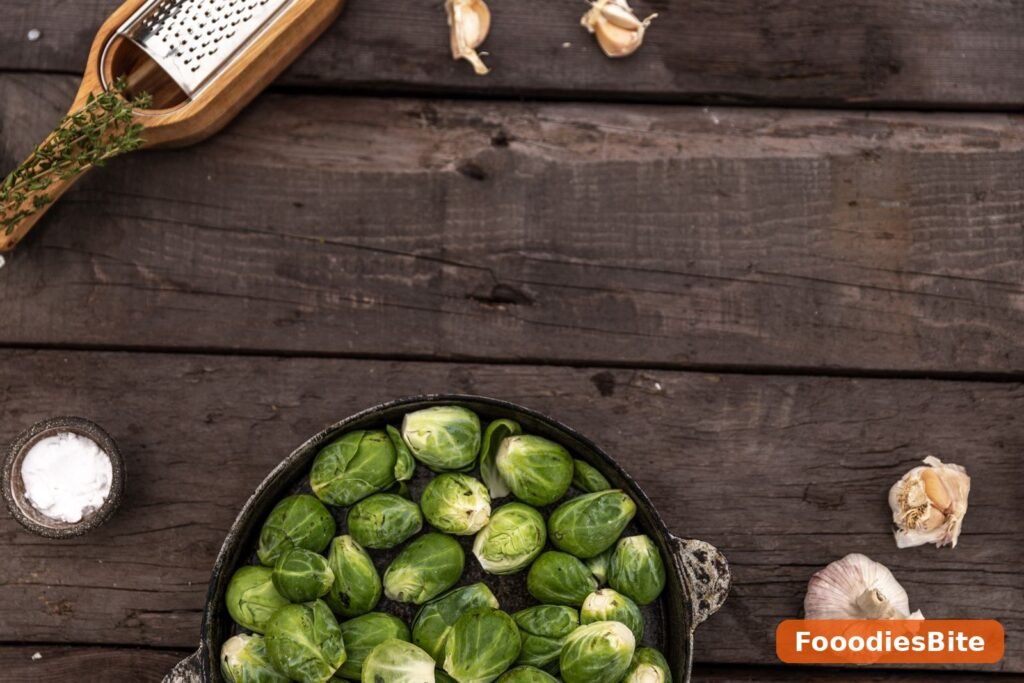
Arrange the sprouts on the prepared pan, cut side down, in a single layer with space between them. Placing them cut side down is important, because the flat surface browns and caramelises against the hot pan, giving you those golden, crispy faces that make roasted sprouts so good. Scatter the sliced garlic over and around the sprouts, then roast for about fifteen minutes without opening the oven. At this point, the cut sides should be starting to brown.
Turn the sprouts with tongs or a spatula, and return them to the oven for another ten to twelve minutes, until they are tender when pierced with a knife and deeply browned in spots. Some of the outer leaves will have darkened and crisped, and a few may have come loose and turned into chips. Those are the best bits, so do not throw them away. If your sprouts are browning too fast before they are tender inside, lower the temperature slightly and give them a few more minutes. If they are tender but pale, leave them in for a few extra minutes and check often, since the jump from golden to burnt can be quick.
Remove the pan from the oven and drizzle the balsamic glaze over the hot sprouts, tossing gently so every sprout gets a glossy coating. If you are using honey, whisk it into the glaze first for extra sweetness. Taste and adjust the salt, then scatter over the toasted nuts, Parmesan, lemon zest, or pepper flakes if you are using them. Serve straight away, while the crispy leaves are still crisp and the glaze is warm and shiny.
One detail that makes a real difference is not glazing too early. Balsamic glaze contains sugars that burn easily at roasting temperature. If you add it at the start, it will darken and turn bitter before the sprouts are cooked. Adding it at the end, off the heat or in the last minute, keeps it sweet and tangy. The same principle applies to honey. A little sweetness at the end lifts the dish; sweetness cooked for too long turns acrid.
Tips for Crispy, Caramelised Sprouts
The most common reason roasted sprouts disappoint is crowding. When sprouts are piled together, they steam, and steamed sprouts are soft and grey rather than crisp and golden. Use a large pan, or two pans if needed, and leave space between the sprouts. It feels wasteful to use two pans for one vegetable, but the difference in result is enormous, and it is the single most important tip in this recipe.
The second tip is dryness. Wash the sprouts if they need it, but dry them thoroughly before oiling. Water on the surface turns to steam in the oven and works against browning. A salad spinner works well if you have one, or a clean kitchen towel does the job. The third tip is heat. A properly preheated oven at 425°F is hot enough to caramelise without drying the sprouts out. If your oven runs cool, your sprouts may need a few extra minutes. Use the look and the fork test, not just the timer, to judge doneness.
The fourth tip is about the cut. Halving through the core keeps the leaves together, which matters because loose leaves burn while the centre is still raw. If a lot of leaves fall off during prep, that is fine; scatter them on the pan too, but check them early, since they will crisp faster than the halves. And finally, season generously. Sprouts can handle salt, and under-seasoned sprouts taste flat and bitter. Salt before roasting, then taste again after glazing, because the sweetness of the balsamic changes how salty the dish tastes.
Brussels sprouts are part of the cabbage family, and the Brussels sprout has a surprisingly long cultivation history in Europe, which explains why it shows up in so many traditional winter dishes.
Variations to Try
For a richer, meatier version, cook diced bacon or pancetta in a skillet until crisp, then toss the hot roasted sprouts with the bacon and a spoonful of the rendered fat instead of some of the olive oil, before glazing. The smoky saltiness pairs beautifully with the sweet-tart balsamic. For a vegetarian version with similar depth, add smoked paprika and a handful of toasted hazelnuts, which bring a warm, savoury note without any meat.
For a holiday version, add dried cranberries and toasted pecans along with the glaze, plus a little orange zest. The cranberries soften slightly on the hot sprouts, the pecans add crunch, and the orange brightens the whole dish. It looks festive on the table, with deep green, ruby red, and golden brown, and it tastes like the season. For a lighter, spring version, skip the balsamic and finish with lemon juice, lemon zest, and a shower of fresh herbs like parsley and mint. The sprouts stay crisp and bright, and the dish feels much less wintry.
You can also change the cheese. Crumbled goat cheese, added while the sprouts are still hot, melts slightly and adds a creamy tang that works wonderfully with balsamic. Feta does something similar, with a saltier edge. Or skip the cheese entirely and finish with a drizzle of good olive oil and flaky sea salt, letting the sprouts and glaze speak for themselves. All of these versions start from the same roasting method, which is why it is worth learning well.
Serving Ideas
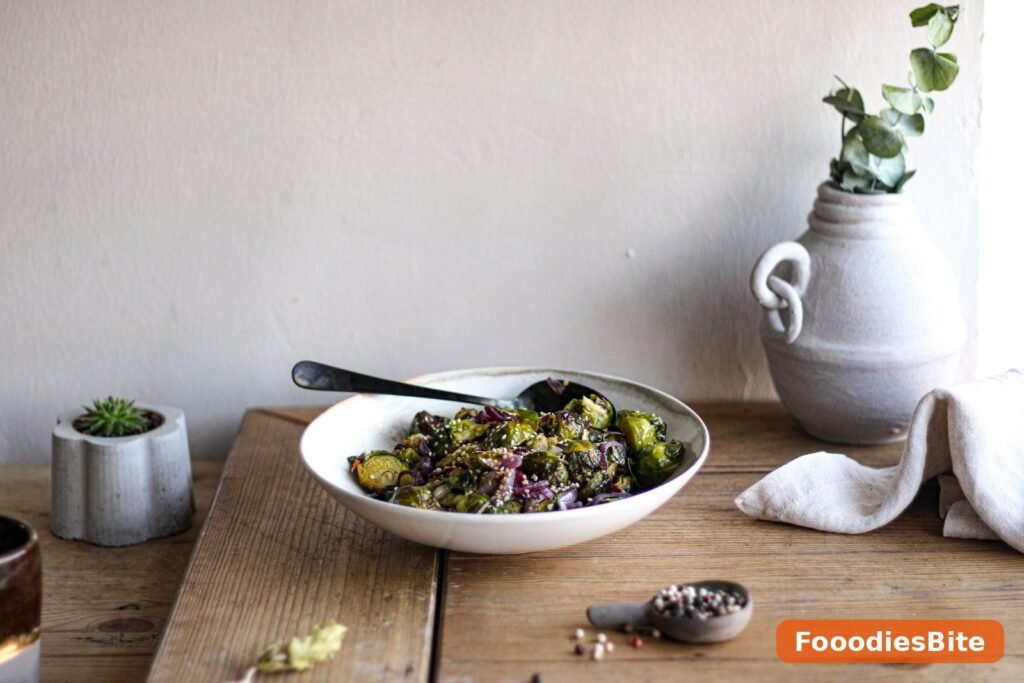
Roasted Brussels sprouts with balsamic glaze are a natural partner for roast meats. With roast chicken or turkey, they bring a sweet-tart contrast that cuts through the richness of the skin and gravy. With pork, especially a roast loin or chops, the balsamic echoes the fruit-based sauces that traditionally accompany pork, like apple or cranberry. With beef, they add a green, slightly bitter note that balances the richness of the meat. In all of these pairings, the sprouts hold their own without needing any extra sauce.
They are also excellent with vegetarian mains. Serve them over a grain bowl with quinoa or farro, a spoonful of hummus, and some toasted seeds, and you have a filling, flavourful dinner. Or pair them with a creamy pasta or a baked macaroni cheese, where their crisp, tangy character contrasts with the soft, rich pasta. For a simple weeknight plate, I often serve them with a one-pan chicken dinner and a starchy side, because the sprouts bring the vegetable element and the balsamic brings the brightness, and the meal feels complete without much planning.
For a holiday spread, these sprouts sit happily next to mashed potatoes, stuffing, and cranberry sauce, adding colour and a different texture to a table that can otherwise feel soft and brown. They can rest at warm room temperature for a short while without suffering too much, though the crispy leaves soften gradually, so serve them as soon as you reasonably can. For a simple, stress-free main to go with them, the simple chicken dinner for two is an easy, delicious choice, and the one-pan skillet collection has more mains that share the same straightforward, oven-friendly spirit.
Storage and Make-Ahead Tips
Leftover roasted sprouts keep in an airtight container in the fridge for up to three days. They will lose their crispness, but they are still very tasty, especially chopped and added to a grain salad, a frittata, or a pasta dish the next day. To reheat, spread them on a sheet pan and warm them in a 400°F oven for seven to ten minutes, until heated through and re-crisped at the edges. Avoid the microwave if you can, since it makes them soft and a little soggy. A fresh drizzle of balsamic glaze after reheating revives the flavour nicely.
You can prep ahead by trimming and halving the sprouts up to two days in advance, storing them in an airtight container or bag in the fridge. You can also make the balsamic glaze ahead and keep it in a sealed jar at room temperature for a week or in the fridge for longer. On the day, all that is left is oiling, roasting, and glazing, which takes under forty minutes. Do not roast the sprouts fully ahead and reheat them for guests if you can avoid it, because the crispy leaves are the best part, and they do not survive a second heating as well as the centres do.
Freezing roasted sprouts is not recommended. Like most roasted vegetables, they turn soft and watery after thawing, and the glaze becomes sticky rather than glossy. If you have a large quantity of fresh sprouts, blanch and freeze them raw instead, then roast them from thawed when you need them. For this recipe, fresh sprouts roasted on the day will always give you the best result.
Frequently Asked Questions
Why are my Brussels sprouts bitter?
Bitterness in sprouts comes mostly from overcooking at low heat or from old, large sprouts. Roasting at high heat caramelises their sugars and softens the bitter edge, which is why roasted sprouts taste sweeter than boiled ones. Choosing small, fresh, firm sprouts also helps, since older sprouts tend to be more bitter. And the balsamic glaze itself balances any remaining bitterness with sweetness and acidity, so do not skip it if bitterness is your concern.
Should I cut Brussels sprouts in half before roasting?
Yes, halving is best for most sprouts. It creates a flat surface that browns beautifully, and it helps the centre cook faster, so the sprout is tender inside and crisp outside. Very small sprouts can be left whole, and very large ones can be quartered. The goal is pieces of roughly similar size, so everything cooks evenly. Always cut through the core, so the leaves stay attached rather than falling apart.
Can I make balsamic glaze from balsamic vinegar?
Yes, and it is easy. Simmer balsamic vinegar gently with a little honey until it reduces by about half and coats the back of a spoon. Let it cool before using, because it thickens as it cools. Do not boil it hard or reduce it too far, or it will become bitter and sticky. Store-bought glaze is a fine shortcut too, and it saves time on a busy cooking day, so use whichever suits you.
How do I keep the crispy leaves from burning?
Loose outer leaves crisp faster than the sprout halves, so check them a few minutes before the sprouts are done, and pull the pan out if they are darkening too much. You can also tuck loose leaves under the halves, where they are protected from direct heat but still crisp. A little char is good and adds flavour, but fully black leaves taste bitter, so watch the pan in the last five minutes and do not walk away.
What goes well with roasted Brussels sprouts?
Roast chicken, turkey, pork, beef, and salmon all pair beautifully, as do grain bowls, creamy pasta, and baked potato dishes. The sweet-tart balsamic finish makes them especially good next to rich or fatty foods, where they provide contrast. For a complete meal, add a protein and a starch, and let the sprouts provide the green, crispy element. They also work well as part of a holiday spread, next to more traditional sides.
Can I roast Brussels sprouts in an air fryer?
Yes, the air fryer is excellent for sprouts, because the circulating hot air crisps them quickly. Halve and oil them as usual, then cook at 380°F for about fifteen to eighteen minutes, shaking the basket halfway through, until browned and tender. Glaze them after cooking, not before, for the same reason as in the oven: the sugars in the glaze burn easily. For more roasting inspiration, the FooodiesBite homepage is worth a browse, and BBC Good Food’s Brussels sprout recipes offer several more ways to cook them.