
There are cakes that impress you with layers and frosting and a long list of decorations, and then there is pound cake, which impresses you in a much quieter way. It does not need much. A slice of it, still faintly warm, with a spoonful of berries spooned over the top, is the kind of dessert that makes a normal evening feel a little bit special. No occasion is required. No piping bag, no fondant, no stress. Just butter, sugar, eggs, flour, and vanilla, baked slowly until the outside is golden and the inside is dense in the best possible sense of the word.
I learned to make pound cake from a neighbour who baked one almost every Sunday, and her kitchen always smelled like vanilla and warm butter by late afternoon. She never measured with great ceremony. She would set out the butter early so it softened properly, beat it with sugar until it turned pale, and then add the eggs one at a time while she talked about something entirely unrelated. The cake came out the same way every time, which told me something important: pound cake is not about fancy technique. It is about patience with a few simple steps, and about not rushing the parts that actually matter.
The berry sauce here is deliberately simple too. It is not a jam, and it is not a complicated coulis that needs straining through a sieve twice. It is berries, a little sugar, and a squeeze of lemon, warmed just long enough for the fruit to soften and release its juices. Spooned over a slice of pound cake, it cuts through the richness of the butter in exactly the right way. The cake is sweet and mellow, the sauce is bright and a little tart, and together they taste like summer even when you make them in the middle of winter with frozen berries.
If you have ever been nervous about baking a cake from scratch, this is a good place to start. There is no yeast to worry about, no layers to stack, and no frosting that needs to look perfect. The batter is forgiving, the cake tells you when it is done, and even a slightly uneven slice still tastes wonderful once the sauce goes on. This recipe makes one generous loaf, enough for eight to ten slices, and it keeps well for days, which means you can bake it on a Sunday and still be enjoying it on Wednesday.
Why This Pound Cake Works So Well
The old idea behind pound cake was beautifully simple: a pound of butter, a pound of sugar, a pound of eggs, and a pound of flour. Modern recipes have softened that idea a little, adding baking powder for lift and milk or sour cream for tenderness, but the spirit is the same. A pound cake should be rich, close-textured, and sturdy enough to slice cleanly. It should not be airy like a sponge, and it should not be dry like a biscuit. When it is right, it holds its shape on the plate, it takes a sauce without falling apart, and it tastes of butter and vanilla first, with everything else in the background.
Creaming the butter and sugar properly is the step that makes the biggest difference, and it is also the step people are most likely to rush. When you beat soft butter with sugar for several minutes, the sugar crystals cut tiny air pockets into the butter. Those pockets expand in the oven and give the cake its lift, since pound cake does not rely on a large amount of baking powder. If you only beat the mixture for thirty seconds, the cake will be heavier and denser than it should be. If you beat it until it looks pale, fluffy, and almost white, you have built the structure the cake needs before a single egg goes in.
Room temperature ingredients matter for the same reason. Cold butter will not cream properly, cold eggs can make the batter curdle, and cold milk will undo the work you just did. Taking everything out of the fridge half an hour before you start is not fussiness. It is the difference between a smooth batter and one that looks separated and unpromising. If you forget, you can warm eggs quickly in a bowl of warm water, and cut butter into small cubes so it softens faster, but the simplest version is just to plan a little ahead.
The other thing that sets this cake apart is vanilla. In a cake with so few ingredients, there is nowhere for a weak flavour to hide. Use real vanilla extract, not the imitation kind if you can help it, and be generous with it. A tablespoon may sound like a lot, but in a batter this size it is exactly right. It perfumes the whole cake and makes the butter taste even richer, without turning the cake into something that tastes only of vanilla. For a little background on where this style of cake comes from, the article on pound cake on Wikipedia is a good, short read.
Ingredients You Will Need
For the pound cake:
- 1 cup (225 g) unsalted butter, softened
- 1 1/4 cups (250 g) granulated sugar
- 4 large eggs, at room temperature
- 1 tablespoon vanilla extract
- 2 cups (250 g) plain flour
- 1 teaspoon baking powder
- 1/2 teaspoon fine salt
- 1/2 cup (120 ml) whole milk, at room temperature
- 1/4 cup (60 g) sour cream
For the berry sauce:
- 2 cups (300 g) mixed berries, fresh or frozen
- 3 tablespoons sugar, plus more to taste
- 1 tablespoon lemon juice
- 1 teaspoon lemon zest, optional
A note on the flour, because it is easy to get wrong without realising it. Spoon the flour into your measuring cup and level it off, rather than scooping straight from the bag, which packs the flour down and can add far more than you intended. Too much flour is one of the most common reasons a pound cake turns out dry, and it is a shame, because the fix costs nothing. The sour cream is there for tenderness and a very slight tang that keeps the cake from tasting one-note. If you do not have sour cream, plain full-fat yoghurt works in its place.
For the berries, use whatever you like or whatever is in season. Raspberries and blackberries are my favourites here because they break down quickly and give a deep, jammy colour. Strawberries work too, though I would hull them and cut them in half first. Blueberries hold their shape a little more, which is fine if you like a chunkier sauce. Frozen berries are genuinely good for this sauce, since they are cooked down anyway, and they mean you can make this dessert all year round. There is no need to thaw them first.
How to Make Classic Vanilla Pound Cake with Berry Sauce
Heat the oven to 325 degrees Fahrenheit (165 degrees Celsius) and prepare a standard loaf pan, about 9 by 5 inches. Grease it well with butter, line the bottom and the long sides with a strip of baking paper, and leave a little overhang so you can lift the cake out later. This small step saves a surprising amount of heartache. Pound cake batter is rich and it likes to stick, and nothing is more frustrating than a beautiful cake that refuses to leave its pan.
In a large bowl, beat the softened butter and sugar together with an electric mixer on medium speed for four to five minutes. You are looking for a mixture that is pale, fluffy, and noticeably lighter in colour than when you started. Scrape down the sides of the bowl once or twice so everything is evenly beaten. Add the eggs one at a time, beating well after each one before adding the next. If the mixture looks a little curdled after an egg goes in, do not worry. A spoonful of the measured flour stirred in with the egg will bring it back together, and it will smooth out completely once the rest of the flour is added. Beat in the vanilla extract with the last egg.
Whisk the flour, baking powder, and salt together in a separate bowl. Add about a third of the flour mixture to the butter mixture and mix on low speed just until it disappears. Add half of the milk and sour cream, mixed together, and stir until combined. Repeat with another third of the flour, the rest of the milk mixture, and then the last of the flour. Stop as soon as you can no longer see dry flour. Overmixing at this stage develops the gluten in the flour and can make the cake tough, so a few gentle strokes with a spatula at the end are better than another minute on the mixer.
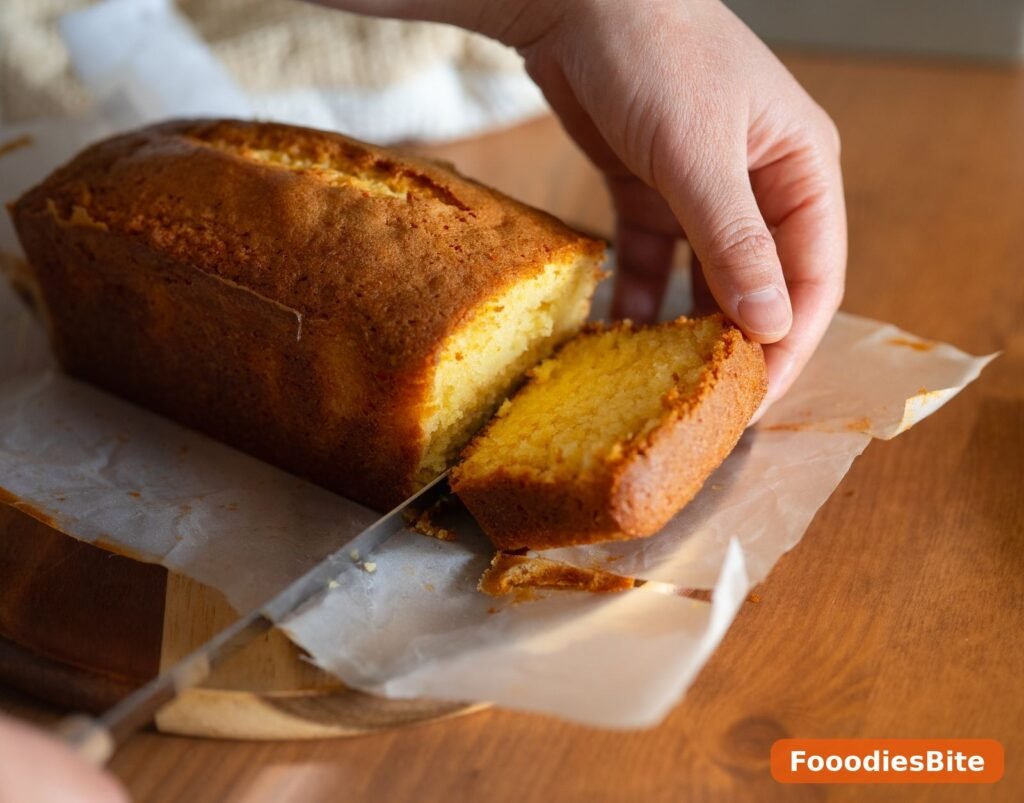
Scrape the batter into the prepared pan and smooth the top with the back of a spoon or a small spatula. Run a knife lightly down the centre of the batter, lengthwise, if you like. This is an old baker’s trick that encourages the cake to crack neatly along the middle as it rises, rather than splitting somewhere unexpected. Bake for 60 to 70 minutes, until the top is deep golden and a skewer or toothpick pushed into the centre comes out with just a few moist crumbs clinging to it. A completely clean skewer usually means the cake is slightly overbaked, so a few crumbs are a good sign.
Let the cake cool in the pan for 15 minutes, then lift it out using the paper overhang and set it on a wire rack to cool completely. It will be tempting to slice it while it is hot, and I will not pretend I have never done it, but the cake slices much more cleanly once it is cool, and the crumb sets properly as it cools. While the cake is cooling, make the berry sauce. Put the berries, sugar, and lemon juice in a small saucepan over medium heat. Stir gently until the sugar dissolves and the berries start to release their juices, about five minutes. If you are using raspberries or blackberries, they will collapse quite quickly. Strawberries will need a minute or two longer. Taste and add a little more sugar if the berries are very tart, or a little more lemon juice if the sauce tastes flat. You want it bright, not just sweet. Let it cool slightly. It will thicken a little as it cools, and it is best served warm or at room temperature, spooned generously over each slice.
Variations Worth Trying
Once you are comfortable with the basic cake, it is easy to change its character without changing the method. For a lemon version, replace half of the vanilla with the finely grated zest of two lemons and add a tablespoon of lemon juice to the milk. The cake will be brighter and a little sharper, and it pairs beautifully with blueberries in the sauce. For an almond version, use a teaspoon of almond extract alongside a teaspoon of vanilla, and scatter flaked almonds over the top of the batter before baking. They toast in the oven and add a lovely crunch.
A chocolate marble version is a favourite with children. Take about a third of the finished batter, stir in two tablespoons of cocoa powder and a tablespoon of milk, and then drop spoonfuls of the chocolate batter into the pan, alternating with the vanilla batter. Drag a knife through it once or twice to create a marbled effect, but do not overdo it, or the two batters will simply blend into one brown cake. It will not be as neat as a bakery marble cake, but it will taste wonderful, and that is what matters.
The berry sauce can change too. In autumn, try it with a handful of chopped apples cooked down with cinnamon, or with plums halved and simmered until soft. In summer, a sauce made from peaches and a little honey is lovely, though it needs a slightly longer cooking time. You can also stir a spoonful of the warm berry sauce into plain yoghurt for breakfast the next morning, which is a good way to use up leftovers without feeling like you are eating dessert twice.
If you would like more baking ideas in this style, the Desserts & Baking archive gathers similar recipes together, and the FooodiesBite homepage is a good place to browse when you are looking for something to make next.
Common Mistakes and How to Avoid Them
The most common problem with pound cake is a sunken middle, and it usually has a simple cause. Opening the oven door too early lets out heat and can cause a cake that is still setting to collapse. Try not to open the door at all for the first 45 minutes. After that, a quick check is fine. An oven that runs cool can also cause sinking, because the cake rises slowly and then cannot hold its structure, so if your cakes often sink, an inexpensive oven thermometer is worth buying. It will tell you the truth about your oven in a way the dial never does.
A dense, heavy texture usually comes from under-creaming the butter and sugar, or from overmixing once the flour goes in. Both are easy to fix once you know to look for them. Give the creaming stage its full four or five minutes, and treat the flour stage gently. Think of it as folding the flour in rather than beating it in, even if you are using a mixer on its lowest speed. The batter should look thick and smooth, not beaten and elastic.
A dry cake, meanwhile, is almost always about measurement or baking time. Weighing your flour, if you have scales, is more reliable than measuring by volume, and checking the cake five minutes before the recipe says it should be done is a good habit. Every oven is a little different, and a cake that is perfect at 62 minutes in one oven may be dry at 70 minutes in another. The skewer test, looking for a few moist crumbs rather than a bone-dry skewer, is your best guide.
Another mistake is using a pan that is the wrong size. A pan that is too small will overflow, and a pan that is too large will make a thin cake that overbakes quickly. A standard 9 by 5 inch loaf pan is the right size for this amount of batter. If you only have a bundt pan, the cake will bake faster, so start checking it at about 50 minutes, and grease the pan very thoroughly, since bundt pans have more corners for cake to cling to.
Storing and Keeping It Fresh
Pound cake keeps better than most cakes, which is one of its many virtues. Wrapped tightly in cling film or kept in an airtight container, it will stay moist at room temperature for three to four days. In fact, many people think it tastes even better on the second day, once the flavours have settled and the crumb has firmed up a little. Keep the berry sauce separately in the fridge, in a covered container, for up to four days, and warm it gently before serving. If you pour the sauce over the whole cake at once, the leftover slices will go soggy, so it is always better to sauce each slice as you serve it.
For longer storage, pound cake freezes beautifully. Slice it first, wrap each slice individually, and put the wrapped slices in a freezer bag. They will keep for up to two months. A frozen slice thaws in about half an hour at room temperature, or you can warm it gently in a low oven for a few minutes, which makes it taste almost freshly baked. The berry sauce also freezes well in a small container, though fresh berries are so easy to cook down that I usually just make a fresh batch.
Serving Ideas
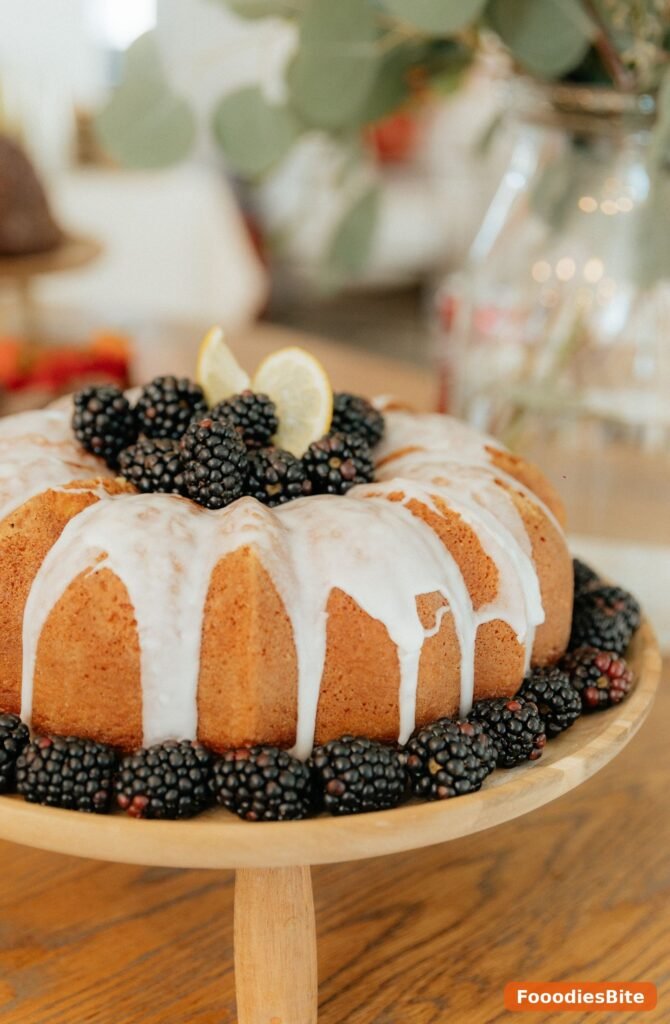
The simplest way to serve this cake is exactly as the recipe suggests: a thick slice, a generous spoonful of warm berry sauce, and nothing else. It does not need cream, though a spoonful of softly whipped cream or a scoop of vanilla ice cream will not hurt anyone, especially if you are serving it to guests and want it to feel a little more like a proper dessert. A dusting of icing sugar over the cake just before serving makes it look pretty with almost no effort, and a few fresh berries scattered on the plate make the whole thing look like you tried much harder than you did.
For a brunch table, serve the cake alongside fresh fruit and coffee, and let people help themselves. It sits happily at room temperature for hours, which makes it ideal for a gathering where people drift in and out of the kitchen. For a dinner party, warm the slices very briefly in the oven, spoon over the sauce, and add a dollop of mascarpone or clotted cream. The contrast between the warm cake, the bright sauce, and the cool cream is genuinely lovely, and it turns a simple cake into something people will ask you about.
It also makes a wonderful gift. A whole loaf, wrapped in baking paper and tied with string, with a small jar of berry sauce alongside it, is a thoughtful present that does not require a special occasion. I have given it to new neighbours, to friends who have had a difficult week, and to my mother on more birthdays than I can count. Food that is made with care carries a message that a shop-bought gift rarely does, and pound cake, with its simple ingredients and honest flavour, carries that message particularly well. If you are planning a meal around it, a simple main course first keeps the evening relaxed, and a recipe like Simple Chicken Dinner for Two pairs nicely before a sweet finish.
Frequently Asked Questions
Can I use salted butter instead of unsalted?
Yes, you can, with one small adjustment. Leave out the half teaspoon of salt in the recipe, since salted butter already contains salt, though the amount varies by brand. The cake will still bake perfectly well, and the difference in flavour is small. Unsalted butter is preferred by most bakers simply because it gives you control over the salt, but if salted butter is what you have in the fridge, use it and do not worry. The cake will still be delicious, and no one at the table will know the difference.
Why did my pound cake crack on top?
A crack along the top of a pound cake is completely normal, and in fact many bakers consider it a sign of a good cake. It happens because the outside of the cake sets while the inside is still rising, and the top splits to make room. Running a knife down the centre of the batter before baking, as described in the method, encourages a neat crack in the middle rather than a random split. If the crack bothers you, you can serve the cake upside down, or dust it with icing sugar, but there is no need to fix something that is not a problem. For more on classic cake styles, the cake recipes collection from BBC Good Food shows how many traditional cakes crack in exactly this way.
Can I make this cake in a bundt pan?
Yes, a bundt pan works well, though you should grease it very thoroughly and dust it lightly with flour, paying attention to the grooves. The cake will bake a little faster in a bundt pan because more of the batter is exposed to the heat, so start checking it at about 50 minutes. A bundt shape also looks beautiful with berry sauce drizzled over it, since the sauce pools in the curves. Let the cake cool in the pan for 15 minutes before turning it out, and if it sticks, a gentle tap and a little patience usually free it.
Can I use frozen berries for the sauce?
Absolutely. Frozen berries are ideal for a cooked sauce, since they break down as they heat and you do not need them to look perfect. There is no need to thaw them first. Just put them in the saucepan straight from the freezer and give them a few extra minutes to come up to temperature. The sauce may be a little more liquid than one made with fresh berries, because frozen fruit releases more water, so let it simmer for an extra minute or two until it thickens to a spoonable consistency. Taste before serving, as frozen berries can vary in sweetness.
How do I know when the cake is done?
The best test is a skewer or toothpick pushed into the centre of the cake. It should come out with a few moist crumbs attached, but no wet batter. The top should be deep golden brown, the cake should have pulled slightly away from the sides of the pan, and it should spring back lightly when you press the top with a fingertip. If you have an instant-read thermometer, the centre of the cake should read around 200 degrees Fahrenheit. Trust a combination of these signs rather than the timer alone, since every oven behaves a little differently.
Can I make the cake ahead of time?
Yes, and it is one of the best cakes to make ahead. Bake it a day before you need it, let it cool completely, and wrap it tightly. The flavour improves overnight, and the crumb becomes easier to slice. Make the berry sauce on the day you plan to serve it, or up to two days ahead and keep it in the fridge. If you are baking for a crowd, you can double the recipe and bake it in two loaf pans, though you should check both cakes separately, since they may not bake at exactly the same rate. For another small-batch sweet treat, Small-Batch Chocolate Chip Cookies Without Brown Sugar is a good companion recipe when you want something baked but not a whole cake.