
There is a particular kind of hunger that hits on a busy evening, the kind where you want something hot, savory, and satisfying, and you want it soon. That is exactly when this one-pan beef and vegetable stir-fry noodles recipe earns its place in your regular rotation. Thin strips of beef sear quickly in a screaming-hot pan, vegetables stay crisp and bright, and everything gets tossed with glossy noodles in a soy-ginger sauce that tastes like it took far longer to make than it actually did.
The beauty of a stir-fry is that it respects your time. There is no long simmer, no oven preheating, no pile of pots. You do most of the work with a knife before the pan even gets hot, and then the cooking itself is over in about fifteen minutes. The result is a meal that feels like takeout but tastes fresher, because you control the sauce, the salt, and the vegetables, and nothing has been sitting in a container getting soggy.
This recipe is also wonderfully flexible. The beef can be swapped, the vegetables can follow whatever is in your fridge, and the noodles can be whatever you have on hand — egg noodles, rice noodles, or even spaghetti in a pinch. Once you understand the rhythm of it — sear the beef, cook the vegetables, build the sauce, toss the noodles — you can make a version of it any night of the week without ever looking at the recipe again.
Why This Stir-Fry Works So Well
The secret to a good stir-fry is heat and space. A very hot pan sears the beef instead of steaming it, which is what gives you those browned, savory edges that carry so much flavor. Cooking the beef in a single layer, without crowding the pan, matters just as much. If you pile everything in at once, the temperature drops and the meat ends up gray and soft instead of golden. If your pan is on the smaller side, sear the beef in two batches — it takes two extra minutes and the difference is enormous.
The sauce is the other half of the magic. Soy sauce brings salt and depth, a little brown sugar rounds the edges, fresh ginger adds warmth, garlic adds punch, and a splash of rice vinegar or lime juice at the end keeps everything bright. A spoonful of cornstarch mixed with water thickens the sauce just enough that it clings to the noodles instead of pooling at the bottom of the pan. It is a simple combination, but it is balanced in a way that makes the whole dish taste complete.
And then there are the vegetables. The trick is to cook them just until they are tender-crisp — still with a bit of bite, still vivid in color. Mushy stir-fry vegetables are the saddest thing in the world, and they are entirely avoidable if you keep the heat high and the cooking time short. Bell peppers, broccoli, snap peas, and carrots all hold up beautifully here, and they make the dish feel generous and colorful.
Ingredients You’ll Need
For the beef, you will need about one pound of flank steak or sirloin, sliced very thinly against the grain. Slicing against the grain is what makes the beef tender rather than chewy, so take a moment to look at the direction of the fibers and cut across them. If the steak is slightly frozen — about thirty minutes in the freezer — it slices much more easily, which is a handy trick if your knife skills are still a work in progress.
For the vegetables, gather one red bell pepper sliced into strips, one large carrot cut into thin matchsticks, two cups of broccoli florets, one cup of snap peas, and three green onions sliced for garnish. You can swap in whatever you have: mushrooms, baby corn, shredded cabbage, or zucchini all work. The goal is a mix of colors and textures, not a strict shopping list.
For the noodles, eight ounces of dried egg noodles, rice noodles, or lo mein noodles will do. Cook them according to the package, but pull them out a minute before they are fully done — they will finish cooking in the pan with the sauce, and slightly underdone noodles hold their texture far better. For the sauce, you will need a third of a cup of soy sauce, two tablespoons of oyster sauce, one tablespoon of brown sugar, one tablespoon of freshly grated ginger, three cloves of garlic minced, one tablespoon of rice vinegar, one tablespoon of sesame oil, and one tablespoon of cornstarch mixed with two tablespoons of cold water. A tablespoon or two of neutral oil for the pan rounds it out.
How to Make One-Pan Beef and Vegetable Stir-Fry Noodles
Start by whisking all the sauce ingredients except the cornstarch mixture together in a small bowl, and set it aside. Then toss the sliced beef with a tablespoon of soy sauce and a teaspoon of cornstarch — this light coating, a technique borrowed from Chinese cooking, helps the beef brown beautifully and stay tender. Cook the noodles, drain them, and toss them with a tiny drizzle of sesame oil so they do not stick together while you work.
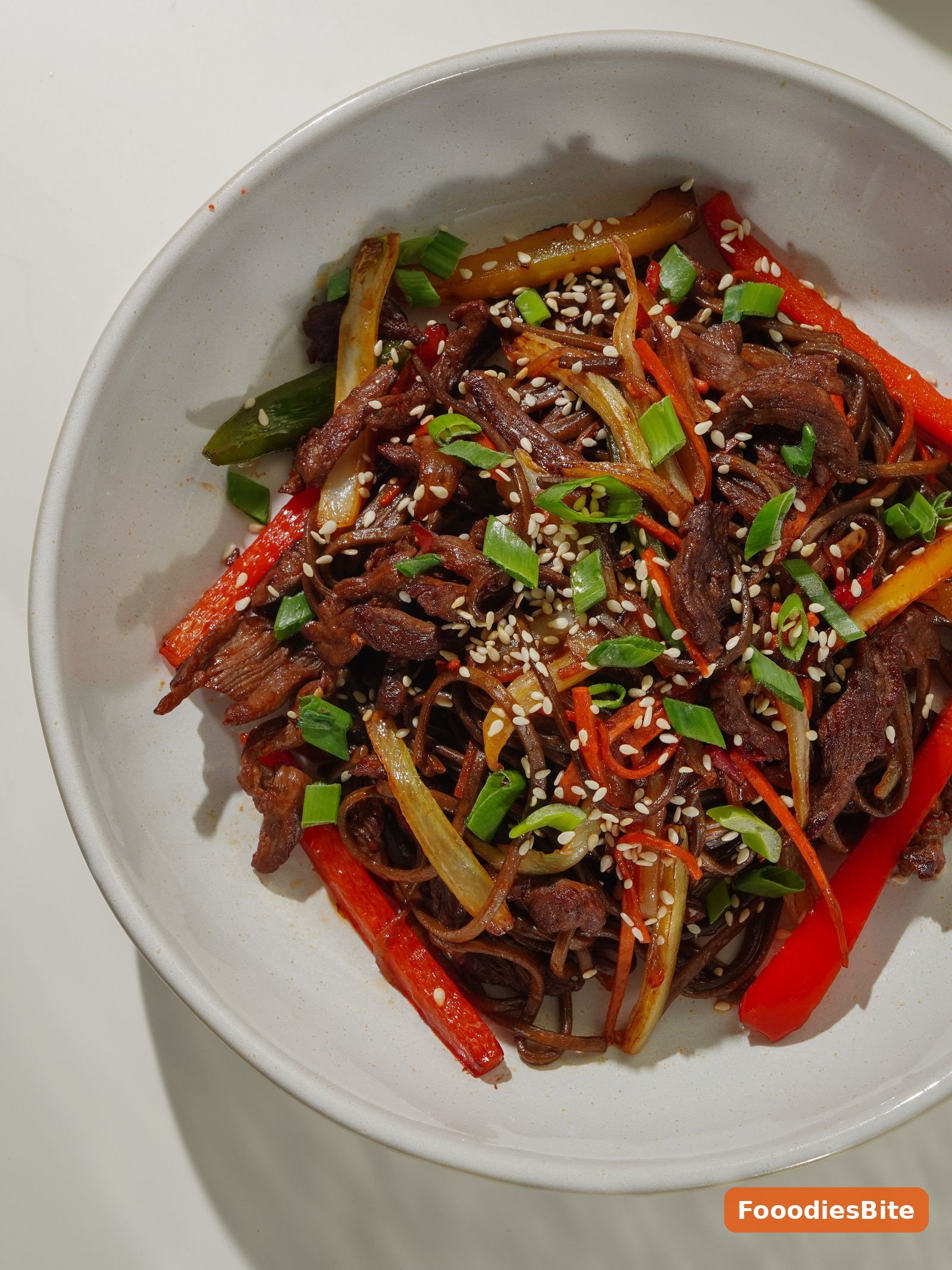
Heat a large skillet or wok over high heat until it is very hot, then add a tablespoon of oil and swirl it around. Add half the beef in a single layer and let it sear undisturbed for about ninety seconds, then flip and sear the other side for another minute. Remove it to a plate and repeat with the remaining beef. You want deep brown color on the meat, so do not stir it constantly — let the pan do its work.
Lower the heat slightly to medium-high and add a little more oil. Add the carrots and broccoli first, since they take the longest, and stir-fry for two minutes. Then add the bell pepper and snap peas and cook for another two minutes, until everything is bright and just tender. Add the garlic and ginger and stir for thirty seconds until fragrant. Pour in the sauce and let it bubble for a minute, then stir in the cornstarch mixture and cook until the sauce thickens and turns glossy, about one more minute.
Return the beef to the pan along with the drained noodles, and toss everything together for two minutes so the noodles soak up the sauce and heat through. If the pan looks dry, add a splash of water or broth to loosen things. Taste and adjust — a little more soy for salt, a squeeze of lime for brightness, or a pinch of sugar if the sauce tastes sharp. Serve immediately, topped with sliced green onions and sesame seeds.
Tips for a Better Stir-Fry
Preparation is everything with a stir-fry, because once the cooking starts, it moves fast. Have every ingredient sliced, measured, and sitting next to the stove before you turn the heat on. This is the classic mise en place approach, and it is the difference between a calm, enjoyable cook and a frantic scramble while garlic burns in the pan.
The pan itself matters too. A large cast-iron skillet or a wok gives you the most surface area, which is what you need for proper searing. A small nonstick pan will crowd the ingredients and trap steam, which is the enemy of a good stir-fry. If all you have is a smaller pan, cook in batches — the extra few minutes are worth it. And keep the heat high: a timid flame is the most common reason home stir-fries taste flat compared to restaurant ones.
If you are new to stir-frying technique, reading up on how stir frying works can help you understand why high heat and constant motion matter so much. The basic idea is simple — hot pan, small pieces, fast cooking — but understanding the why makes it easier to get right every time, even when you change the ingredients.
Variations to Try
This recipe is a template as much as a fixed dish. Swap the beef for thinly sliced chicken thighs, shrimp, or extra-firm tofu pressed and cubed — the sauce works with all of them. For a vegetarian version, double the mushrooms and add a can of drained baby corn; the oyster sauce can be replaced with a vegetarian mushroom-based version, or simply with extra soy sauce and a pinch of sugar.
The noodle choice changes the character of the dish too. Rice noodles make it lighter and gluten-free if you use tamari instead of soy sauce. Udon noodles turn it into something thick and chewy and deeply comforting, especially on a cold night. And if you are out of noodles entirely, the same beef and vegetables are wonderful served over rice — the sauce pools into the grains in the best way.
For heat lovers, sliced fresh chili or a spoonful of chili garlic sauce stirred into the sauce adds a pleasant burn without changing the balance. For a nuttier finish, a spoonful of peanut butter whisked into the sauce turns it into a satay-style noodle dish that kids tend to love. And if you want more vegetables, shredded cabbage wilts into the pan beautifully and stretches the meal for a crowd.
Serving Ideas
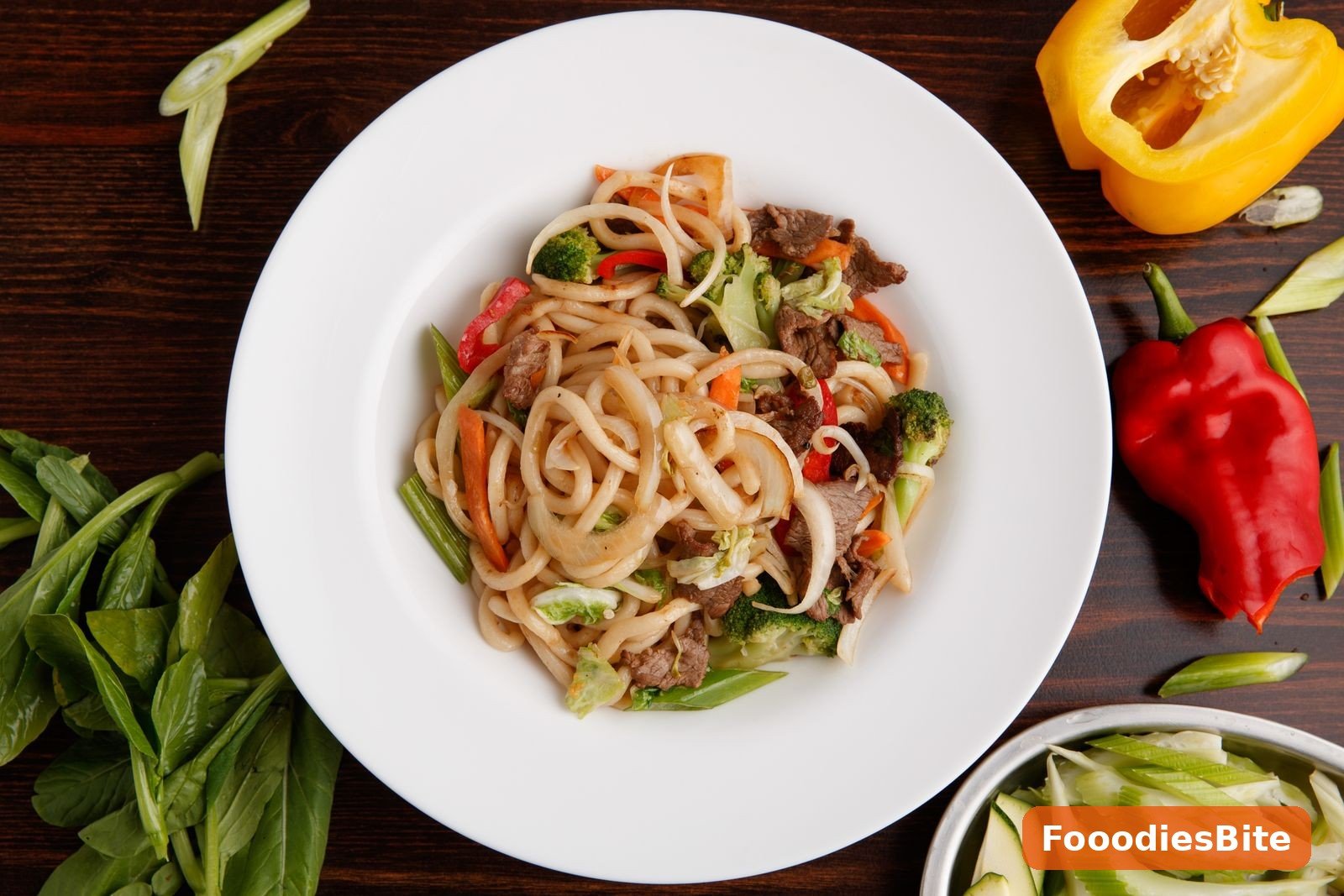
Stir-fry noodles are best served the moment they leave the pan, piled into wide bowls while the sauce is still glossy and the vegetables are still crisp. Top each bowl with sliced green onions, toasted sesame seeds, and, if you like, a few chili flakes or a wedge of lime for squeezing over the top. A small dish of extra soy sauce or chili oil on the table lets everyone season their own bowl.
If you are feeding a crowd, this dish scales up well — just cook the beef and vegetables in batches and toss everything together at the end in your largest pan. A simple side of cucumber salad or steamed edamame adds freshness, and a light dessert from the desserts and baking collection is a nice finish. For a full week of easy dinners, pair this with another quick option from the chicken recipes collection or the one-pan skillet collection.
Leftovers keep in the fridge for up to three days in an airtight container. Reheat them in a skillet over medium heat with a splash of water to loosen the noodles, rather than in the microwave, which tends to make noodles rubbery. The vegetables will soften a little on reheating, but the flavor holds up well, and many people — myself included — think the leftovers taste even better the next day once the sauce has had time to soak in.
Storage and Make-Ahead Notes
You can do most of the prep a day ahead: slice the beef and vegetables, mix the sauce, and store everything separately in the fridge. When dinner time comes, the cooking takes about fifteen minutes. This is one of my favorite tricks for busy weeks — ten minutes of prep on Sunday makes Monday dinner feel effortless.
Cooked leftovers should be cooled quickly and stored in a sealed container for up to three days. I would not freeze this dish, because the noodles go soft and the vegetables lose their texture when thawed. If you want a freezer-friendly version, cook the beef and sauce without the noodles and freeze that mixture, then cook fresh noodles when you are ready to eat.
If you enjoy this style of cooking, the easy meals with ingredients you already have and the quick chicken dinner with pantry ingredients on FooodiesBite are built on the same idea — simple ingredients, one pan, dinner on the table fast. And if you want to compare your sauce with a classic take, Taste of Home’s beef stir-fry is a good reference for the traditional version of this dish.
Frequently Asked Questions
What is the best cut of beef for stir-fry noodles?
Flank steak is the classic choice because it is flavorful, affordable, and tender when sliced thin against the grain. Sirloin works well too, and skirt steak is excellent if you can find it. Whatever you choose, the slicing matters more than the cut — thin slices across the grain will be tender even from a tougher piece, while thick slices with the grain will be chewy no matter how good the beef is.
Can I use frozen vegetables in this recipe?
Yes, and they are a genuinely useful shortcut. Frozen stir-fry vegetable mixes work fine, though they release more water than fresh ones, so cook them over slightly higher heat and give them an extra minute to drive off the moisture before adding the sauce. The result will not be quite as crisp as fresh, but it will still be tasty, and it turns this into a true pantry dinner.
How do I keep the noodles from getting mushy?
Cook them a minute less than the package says, drain them well, and toss them with a little sesame oil. Then add them to the pan last, and toss just until they are heated through and coated in sauce — two minutes at most. Overcooking noodles in the pan is the main reason stir-fry noodles turn soft, so treat the final toss as a quick step, not a long simmer.
Can I make this recipe gluten-free?
Absolutely. Use rice noodles instead of wheat noodles, and swap the soy sauce for tamari, which is brewed without wheat. Check that your oyster sauce is gluten-free as well, or replace it with extra tamari and a pinch of sugar. The rest of the ingredients are naturally gluten-free, and the dish tastes just as good.
Why is my stir-fry sauce too thin or too thick?
If the sauce is thin, it usually means the cornstarch was not fully activated — make sure the sauce is actually bubbling when you add the cornstarch mixture, and give it a full minute to thicken. If it is too thick, splash in water or broth a tablespoon at a time until it coats the noodles without clumping. The right consistency is glossy and clinging, like a light gravy rather than a soup.