
There is a particular kind of weeknight dinner that I come back to again and again, the kind where everything goes onto one pan, the oven does most of the work, and the house slowly fills with a smell that makes everyone wander into the kitchen to ask when dinner will be ready. Honey mustard chicken thighs with roasted carrots is exactly that dinner. The chicken turns out juicy with sticky, caramelized edges, the carrots roast until they are sweet and tender with just a little crispness at the tips, and the whole thing needs barely any washing up afterwards.
What makes this combination work so well is the balance in the sauce. Honey on its own would be too sweet, and mustard on its own would be too sharp, but whisked together with a little olive oil, garlic, and lemon, they settle into something that is both comforting and bright. The sauce does double duty here: part of it coats the chicken before roasting so it glazes as it cooks, and the rest gets brushed on near the end for a final glossy finish. Nothing about it is complicated, but the result tastes like you put in far more effort than you actually did.
I also appreciate how honest this recipe is about busy evenings. Chicken thighs are one of the most forgiving cuts you can cook, far more patient than chicken breasts when the oven runs a little hot or dinner gets delayed by ten minutes because of a phone call. Carrots are cheap, keep well in the fridge, and roast beautifully without any special treatment. Put the two together with a sauce made from pantry staples, and you have a dinner that feels considered without demanding a special shopping trip.
Why You’ll Love This Recipe
The first thing to love is how little active cooking is involved. Once you have whisked the sauce and tossed everything onto the pan, your job is mostly to wait, check once or twice, and brush on a little extra sauce near the end. That leaves you free to set the table, help with homework, or simply sit down for a few minutes, which on a busy evening is worth as much as the flavor itself. Sheet-pan dinners like this one are popular for a reason, and this is one of the best examples of the genre.
The second thing is the texture contrast. Good roasted chicken thighs have crisp, golden skin and meat that pulls apart easily, while properly roasted carrots are soft in the middle with edges that have gone sweet and slightly chewy from caramelizing. Eating them together, with a little of the pan sauce spooned over the top, gives you sweet, savory, tangy, and rich in a single bite. It is the kind of combination that does not need a complicated side dish to feel complete.
Cost matters too, and this recipe is kind to a grocery budget. Bone-in, skin-on thighs are usually one of the most affordable cuts of chicken, and carrots are about as inexpensive as vegetables get. The sauce uses honey and mustard that most kitchens already own, plus a lemon and some garlic. There is no expensive cheese, no cream, and no specialty ingredient that you will use once and forget in the back of a cupboard. If you enjoy this style of practical cooking, you will find kindred spirits among our chicken recipes, which lean heavily toward dinners that are both tasty and sensible.
Finally, this dish scales and adapts without drama. Cooking for two? Use fewer thighs and one pan. Feeding a crowd? Add a second pan and rotate them halfway through. Want to use up other vegetables? Potatoes, parsnips, and red onion all roast happily alongside the carrots. Once you have the basic method down, it becomes a template you can return to all winter long, changing the vegetables with the seasons and never quite making the same dinner twice.
Ingredients
You will need about two pounds of bone-in, skin-on chicken thighs, roughly six to eight pieces depending on their size. Skin-on matters here, because the skin crisps up in the oven and protects the meat underneath, keeping it juicy. If you can only find boneless thighs, they will still work, but reduce the cooking time by about five to eight minutes and watch them closely near the end so they do not dry out.
For the honey mustard sauce, whisk together a third of a cup of honey, a quarter cup of Dijon mustard, a tablespoon of whole-grain mustard if you have it, two tablespoons of olive oil, three cloves of garlic, minced, a tablespoon of lemon juice, and a teaspoon of apple cider vinegar. Season with salt, black pepper, and a pinch of red pepper flakes if you like a little warmth. The two mustards together give the sauce both smoothness and texture, but if you only have one, use a third of a cup of whichever you prefer and it will still be delicious. Dijon mustard brings a clean, sharp tang that is the backbone of this sauce, so it is worth using a decent one rather than the mildest yellow mustard in the fridge, though that will work in a pinch.
For the carrots, you will need about one and a half pounds, peeled and cut into pieces roughly two inches long and half an inch thick. Cutting them on a slight diagonal looks nice and gives them more surface area to caramelize. Toss them with a tablespoon of olive oil, salt, pepper, and a teaspoon of dried thyme or rosemary. Fresh herbs are lovely if you have them, but dried herbs hold up better to a long roast and are less likely to burn. A sliced red onion, added to the pan if you like, turns sweet and soft in the oven and is a welcome addition, though it is entirely optional.
How to Make Honey Mustard Chicken Thighs with Roasted Carrots
Preheat your oven to 425 degrees Fahrenheit and line a large rimmed baking sheet with parchment paper or foil for easier cleanup. In a small bowl, whisk together the honey, both mustards, olive oil, garlic, lemon juice, vinegar, salt, pepper, and red pepper flakes until the sauce is smooth and glossy. Taste it and adjust: a little more honey if it feels too sharp, a squeeze more lemon if it feels too sweet. Remember that the flavors will concentrate slightly as the sauce roasts, so a sauce that tastes just right now will taste a touch bolder later.
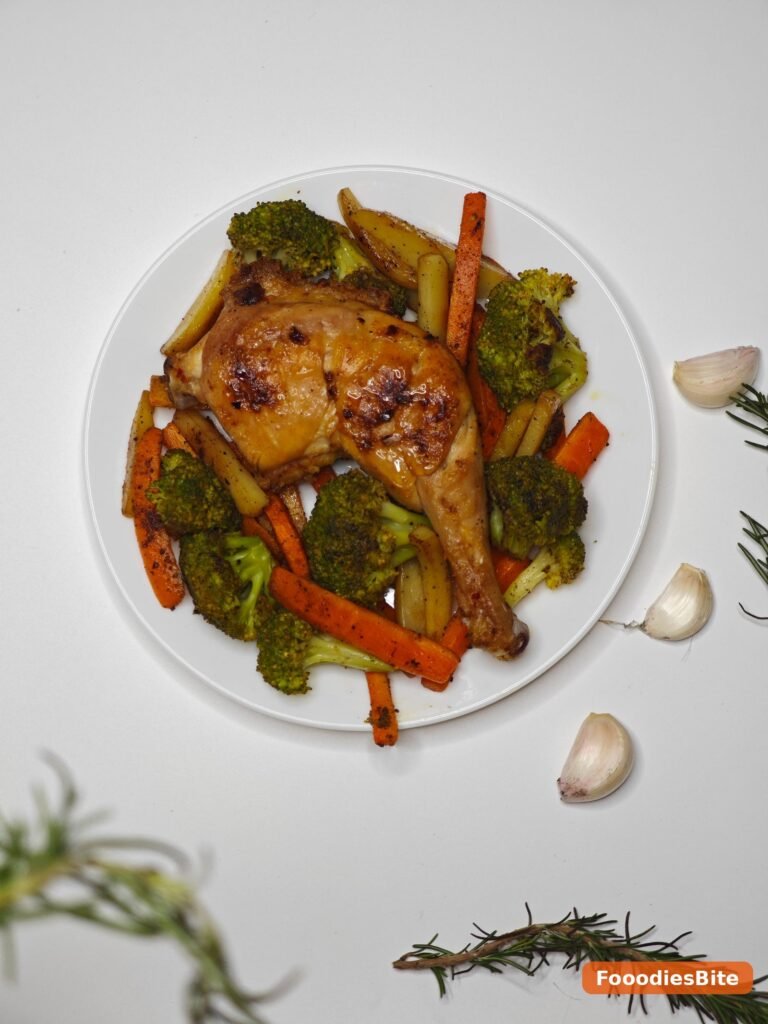
Pat the chicken thighs dry with paper towels and season them lightly with salt and pepper, keeping in mind that the sauce brings its own salt. Place the thighs in a bowl or on the pan and brush or toss them with about two-thirds of the honey mustard sauce, making sure to get some under the skin as well as over it. Getting sauce under the skin is a small step that pays off, because it seasons the meat directly and keeps the skin from sticking as it crisps. Set the remaining third of the sauce aside for brushing later.
Meanwhile, toss the carrots and onion, if using, with olive oil, salt, pepper, and thyme, and spread them in an even layer on the baking sheet. Do not pile them up, because crowded vegetables steam instead of roasting, and you want those caramelized edges. Arrange the chicken thighs on top of or alongside the carrots, skin side up, leaving a little space between each piece so hot air can circulate. If your pan is crowded, use two pans rather than squeezing everything onto one.
Roast for about thirty-five to forty-five minutes, depending on the size of your thighs, until the chicken skin is deep golden and crisp and the thickest part of the meat reads 165 degrees Fahrenheit on an instant-read thermometer. Halfway through, give the carrots a gentle turn so they brown evenly. In the last five minutes, brush the thighs with the reserved sauce and return the pan to the oven so the glaze turns sticky and glossy. Watch closely at this stage, because honey can go from beautifully caramelized to burnt in just a couple of minutes, especially if your oven runs hot.
Let the pan rest for five minutes before serving. This short rest lets the juices settle back into the meat, so the first cut does not flood the plate, and it gives the carrots a moment to cool from blazing hot to pleasantly warm. Spoon any pan juices over the chicken and carrots as you serve, because those juices, mixed with a little of the honey mustard, are too good to leave behind on the parchment.
Tips for the Best Results
The most important tip is to give the chicken skin time to crisp. That means a properly preheated oven, thighs placed skin side up, and resisting the urge to cover the pan with foil. Foil traps steam and leaves the skin pale and soft, which is the opposite of what you want. If the skin is browning faster than the meat is cooking, you can loosely tent just the chicken with foil for the last ten minutes, but in most ovens at 425 degrees this will not be necessary.
Cutting the carrots evenly is the second key habit. Carrots that are all roughly the same thickness cook at the same rate, while a mix of thick chunks and thin slivers means some will burn while others are still hard in the middle. If your carrots vary a lot in thickness, split the thick ones lengthwise so everything is closer to the same size. It takes an extra minute at the cutting board and saves you from fishing burnt pieces off the pan later.
A thermometer takes the guesswork out of chicken thighs. While thighs are forgiving, there is still a difference between juicy and overcooked, and the only reliable way to know is to check the thickest part, away from the bone, for 165 degrees Fahrenheit. If you do not have a thermometer, cut into the thickest thigh and check that the juices run clear and the meat near the bone is no longer pink. It is a good habit to build, and it applies to every chicken dinner you cook.
Finally, save the pan juices. After you lift the chicken and carrots off the pan, you will find a mixture of chicken drippings, honey mustard, and carrot juices that is intensely flavorful. Spoon it over the finished dish, or whisk it with a little extra lemon juice for a quick pan sauce. Throwing it away is like leaving the best part of the meal behind, and this is one of those recipes where the pan itself does a surprising amount of the flavor work.
Variations to Try
This recipe welcomes variation, and the pan is very forgiving about it. Adding baby potatoes, cut in half, turns it into a complete one-pan meal with a starchy side built right in, though you may need a second pan or a longer roasting time to fit everything comfortably. Parsnips roast just as beautifully as carrots and add a slightly earthy sweetness, while Brussels sprouts, halved and tossed in oil, crisp up at the edges and pair wonderfully with the honey mustard glaze.
For a different flavor direction, stir a teaspoon of smoked paprika or a pinch of cumin into the sauce for a warmer, slightly smoky note. A spoonful of whole-grain mustard instead of Dijon gives the glaze a more rustic texture and a milder tang. Fresh rosemary sprigs scattered over the pan during the last fifteen minutes add a piney fragrance that suits the roasted carrots especially well. If you enjoy exploring this kind of flexible, pan-based cooking, our one-pan skillet collection is full of dinners built on the same low-effort, high-reward idea.
You can also adapt this for the grill in warmer months. Marinate the thighs in the sauce for thirty minutes, grill them skin side down first until crisp, then move them to indirect heat to finish, brushing with reserved sauce at the end. Roast the carrots separately in the oven or in a grill basket. The smoky char from the grill adds a whole new layer to the honey mustard, and it is a lovely way to keep this favorite going through the summer.
Serving Ideas
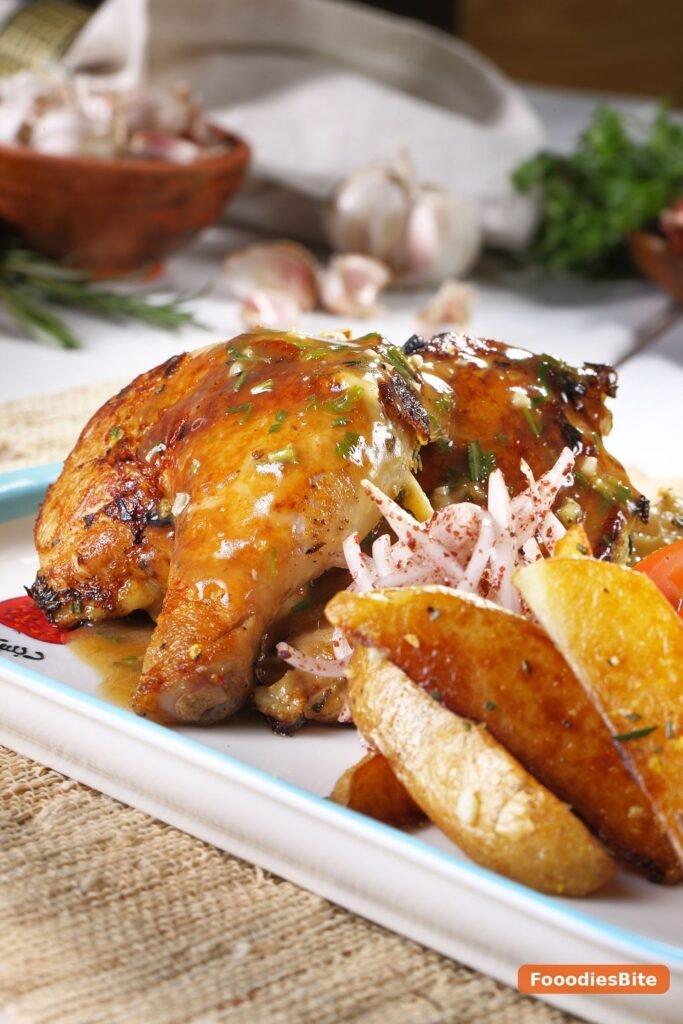
Because the chicken and carrots already make a substantial plate, the best sides are simple ones. A pile of fluffy rice or buttered mashed potatoes soaks up the pan juices beautifully, and both are easy to make while the oven does its work. Crusty bread serves the same purpose and is arguably even better for mopping up sauce. A simple green salad with a light vinaigrette adds freshness and crunch, which balances the sticky sweetness of the glaze.
For a lighter meal, serve the thighs and carrots over a bed of greens with a spoonful of the pan juices as dressing, almost like a warm salad. The contrast of warm, glazed chicken against cool, crisp lettuce is surprisingly good, and it turns a hearty roast dinner into something that feels right even on a warmer evening. However you serve it, put the extra sauce and pan juices on the table so people can help themselves, because someone always wants a little more.
This is also a great dish for a casual gathering. It doubles easily, holds well for a few minutes while people settle, and looks generous and rustic served straight from the pan on a wooden board or a large platter. Scatter a little chopped parsley over the top just before serving for color, and let the golden skin and caramelized carrots do the rest of the talking. For nights when you need something even faster, our quick chicken dinner with pantry ingredients follows the same pantry-first approach with a shorter cooking time.
Storage and Reheating
Leftovers keep in an airtight container in the fridge for three to four days. Store the chicken and carrots together if you like, though the skin will soften in the fridge no matter what you do. To reheat, warm them in a 375 degree oven for about fifteen minutes, which crisps the skin back up far better than the microwave. If you are in a hurry, the microwave works fine for a work lunch, but expect softer skin and plan to add a fresh squeeze of lemon to brighten the flavors back up.
Cooked chicken thighs also freeze well for up to three months. Wrap them tightly, label the container, and thaw overnight in the fridge before reheating in the oven. The carrots freeze less successfully, turning a little soft on thawing, so if you are cooking specifically for the freezer, it is better to freeze the chicken on its own and roast a fresh batch of carrots when you are ready to eat. Leftover chicken, sliced cold, is also excellent in sandwiches and grain bowls the next day, which is a good reason to roast a couple of extra thighs whenever you make this.
Frequently Asked Questions
Can I use boneless chicken thighs instead of bone-in?
Yes, and the recipe still works well. Boneless thighs cook faster, usually in about twenty-five to thirty minutes at the same temperature, so start checking them earlier. They will not have the same crisp skin, but they are easier to slice and serve, which makes them a good choice for grain bowls and salads. Just be careful not to overcook them, since they have less protection than bone-in pieces.
How do I stop the honey glaze from burning?
Honey burns easily, which is why the reserved sauce goes on only in the last five minutes rather than at the start. Keep the oven at 425 degrees rather than higher, and watch the pan closely during that final glazing stage. If the glaze is darkening too fast, move the pan to a lower rack or loosely tent the chicken with foil. A glaze that is deep amber and sticky is perfect; one that is black and bitter has gone too far.
Can I prepare this ahead of time?
You can do most of the prep ahead. Whisk the sauce up to two days in advance and keep it in the fridge, and cut the carrots the night before so they are ready to toss and roast. You can even coat the chicken in sauce a few hours ahead and keep it covered in the fridge, which actually improves the flavor. Take the chill off the pan for fifteen minutes before roasting so everything cooks evenly.
What other vegetables work with this recipe?
Potatoes, parsnips, sweet potatoes, red onion, and Brussels sprouts all roast well alongside the chicken. The rule is to cut everything to a similar size and give it enough room on the pan to brown rather than steam. Denser vegetables like potatoes may need a head start of ten minutes before the chicken goes on, while quicker ones like green beans should go on later so they do not overcook.
Is honey mustard chicken kid-friendly?
Generally yes, especially if you go easy on the mustard and skip the red pepper flakes. The sweetness of the honey makes it approachable for children, and the roasted carrots turn sweet enough that many kids who normally avoid vegetables will eat them happily. If your children are sensitive to tangy flavors, use a little more honey and a little less mustard in their portions, and serve extra sauce on the side for the adults.
Can I make this in an air fryer?
You can cook the thighs in an air fryer at about 380 degrees for twenty to twenty-five minutes, flipping halfway, and they come out wonderfully crisp. The carrots are better roasted in the oven, though, because a full batch rarely fits in an air fryer basket alongside the chicken. For more air-fryer inspiration, including chicken cooked entirely that way, our easy meals with frozen chicken is a useful companion read, and the technique guides at Taste of Home are also worth browsing when you want to compare methods.
Once you have made these honey mustard thighs a few times, they tend to become one of those recipes you cook without looking anything up, adjusting the sauce by taste and the vegetables by whatever is in the fridge. That is the best kind of recipe to have in your back pocket, and it is why this one has stayed in my own rotation through every season.